Why C-Design Is the Perfect Choice for 3D Furniture Modeling
Furniture brands, manufacturers, and interior designers are under constant pressure to launch new collections faster, sell online more convincingly, and cut the cost of physical prototyping. One strategy has quietly become the industry standard for meeting all three goals at once: outsourcing 3D furniture modeling to a specialized studio. Instead of building an in-house CGI team from scratch, companies are partnering with dedicated 3D modeling services like Outsource 3D Modeling to turn sketches, CAD files, or even reference photos into production-ready, photorealistic 3D assets.
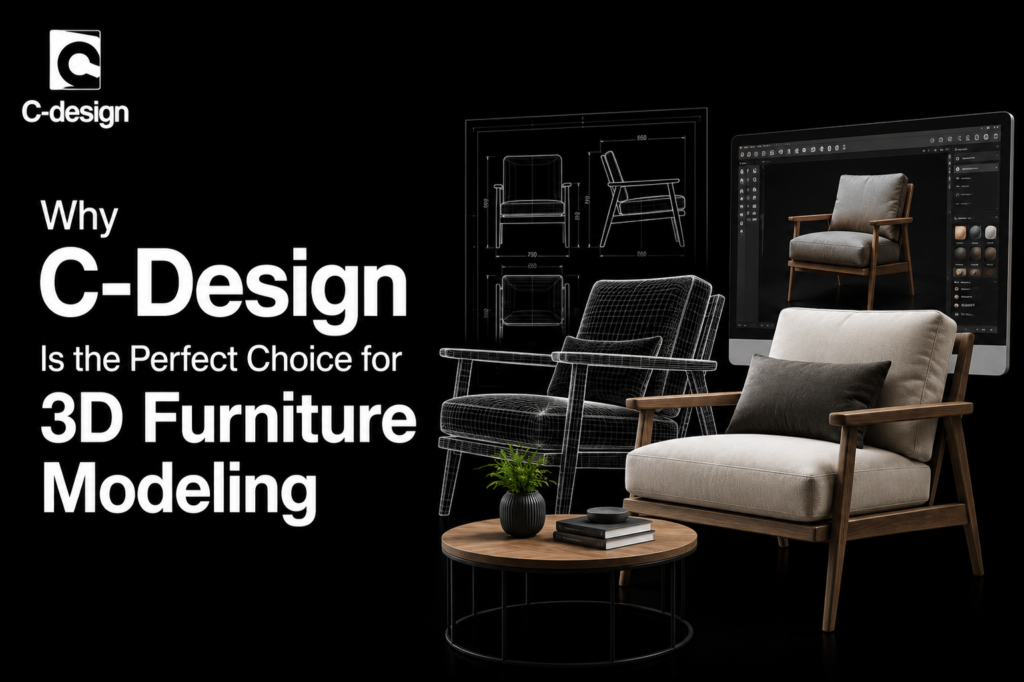
This shift isn’t just a passing trend. As e-commerce, augmented reality (AR), virtual reality (VR), and interactive product configurators become standard tools for furniture retail, high-quality 3D models have moved from “nice to have” to “essential.” In this article, we’ll walk through what 3D furniture modeling outsourcing actually involves, the benefits it delivers, the furniture categories a specialist studio can handle, and how to choose the right outsourcing partner — closing with answers to eight of the most common questions buyers ask.
What Is 3D Furniture Modeling Outsourcing?
3D furniture modeling is the process of translating a physical or conceptual furniture design — a sofa, chair, bed, cabinet, or outdoor lounge set — into a digital three-dimensional model. That model can then be rendered as a photorealistic image, animated for a walkthrough, embedded in an AR app so a shopper can “place” it in their living room, or plugged into an online configurator that lets customers change the fabric, wood finish, or leg style with a click.
Outsourcing this work means handing the modeling, texturing, and rendering pipeline to an external studio rather than hiring, training, and managing an in-house 3D art department. A dedicated outsourcing partner brings a team of modelers, texture artists, and render specialists who already have the software licenses, hardware, and workflow experience needed to deliver consistent, high-quality output on a predictable schedule.
Studios such as C-design, the team behind Outsource 3D Modeling, have been building this kind of pipeline since 2005, working across architectural visualization, product modeling, and furniture-specific 3D services for international brands, design studios, and manufacturing companies.
Why Furniture Brands Are Outsourcing 3D Modeling
1. Faster Time-to-Market
Every physical prototype a manufacturer builds costs time and materials. When a new sofa or chair design exists only as a 3D model, designers and product managers can review proportions, materials, and configurations on-screen and approve changes in hours instead of weeks. Outsourced 3D furniture modeling shortens the design-to-catalog cycle dramatically, letting brands launch new lines and marketing campaigns well ahead of competitors still waiting on physical samples.
2. Lower Production Costs
Photoreal 3D renders reduce the need for expensive photography studios, physical staging, and repeated prototyping rounds. A single well-built 3D furniture model can be re-rendered in dozens of fabric colors, wood finishes, and room settings without ever building a second physical unit. This is one of the most cited reasons manufacturers and designers move their modeling work to a specialized outsourcing partner — it lowers upfront production costs while still producing marketing-ready visuals.
3. Fewer Design Iterations, More Client Buy-In
Clean, accurate 3D models make it easier for stakeholders — whether that’s a retail buyer, an interior designer, or an internal product committee — to visualize the final product and sign off quickly. Precision-built models with correct proportions and realistic textures reduce back-and-forth revisions, since everyone is reviewing the same accurate digital reference rather than interpreting flat sketches or rough renders.
4. Access to Specialized, Scalable Talent
Building an internal 3D modeling department means recruiting, training, and retaining artists skilled in polygon modeling, UV unwrapping, texturing, and rendering software — an expensive and slow process. Outsourcing gives furniture brands immediate access to an experienced team of professionals already fluent in industry-standard tools, plus the flexibility to scale up during a big product launch and scale down during quieter periods.
5. AI-Enhanced Workflows for Speed and Consistency
Modern 3D furniture modeling outsourcing has evolved well beyond manual polygon-pushing. Leading studios now integrate AI-driven tools and custom in-house toolsets into their production pipeline, which speeds up model generation and texture creation — including optimized, tileable textures — while keeping quality and consistency high across large asset libraries. This blend of skilled human modelers and AI-assisted automation is a major reason outsourced studios can now deliver large furniture catalogs on tighter timelines than ever before.
6. Multi-Platform, Multi-Purpose Assets
A single 3D furniture model, built correctly, can serve many purposes: a high-poly version for photorealistic hero renders and marketing campaigns, and a lightweight, optimized medium-poly or LOD (level-of-detail) version for real-time use in product configurators, mobile apps, AR experiences, and Web3D viewers. Outsourcing partners that understand this dual-track approach save clients from having to commission separate builds for print, web, and interactive use cases.
What 3D Furniture Modeling Services Typically Cover
A full-service 3D furniture modeling outsourcing partner generally covers far more than just sofas, although seating is often the anchor category. Based on the service scope offered by studios like Outsource 3D Modeling, typical coverage includes:
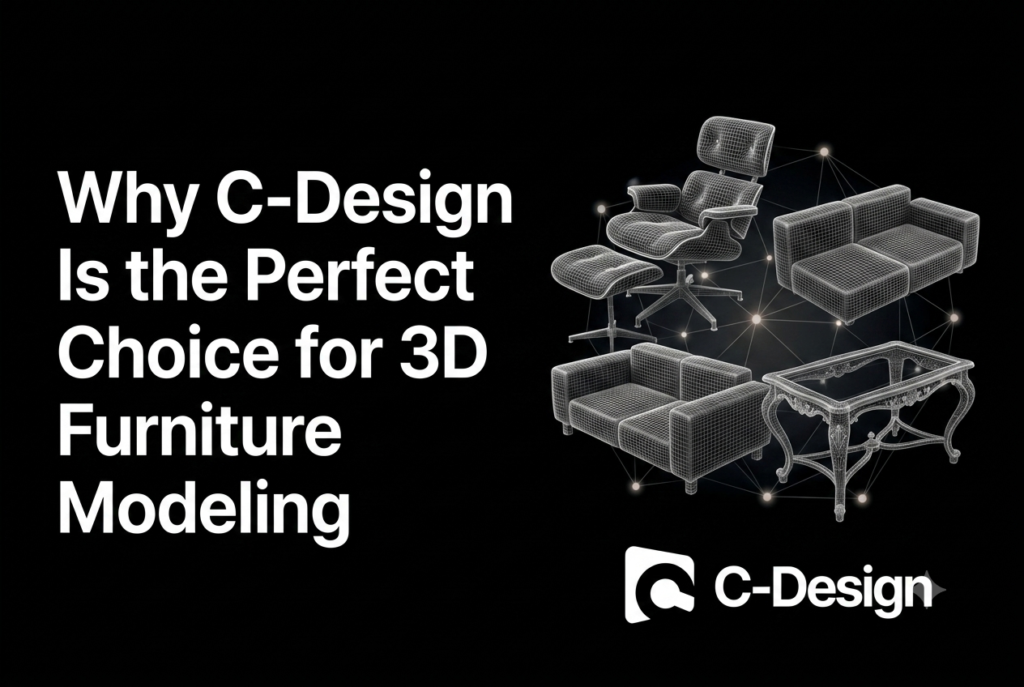
- Sofas in every configuration — single, two-seater, three- and four-seater sofas, modular sofas, sectional sofas, L-shaped and corner sofas, U-shaped sofas, and tufted sofas.
- Chairs and recliners — including recliners with functional mechanisms modeled for realistic animation.
- Beds and mattresses — modeled with accurate proportions and fabric or upholstery detail.
- Outdoor and wicker furniture — for garden, patio, and hospitality collections.
- Coffee tables, ottomans, benches, daybeds, and chaise lounges — completing the full living-space lineup for catalogs and virtual showrooms.
- Industrial, corporate, and home furniture — spanning office furniture, hospitality furnishing, and residential collections alike.
Every model is typically built with clean line flow, real-world proportions, and camera-reference alignment so the finished asset looks and behaves like the physical product — whether it’s dropped into a catalog photo, an AR app, or a virtual reality walkthrough.
Beyond Furniture: A Broader 3D and AR/VR Ecosystem
Furniture modeling rarely exists in isolation. Brands that outsource furniture modeling often also need adjacent services — and a specialized partner that offers the full stack makes vendor management much simpler. That typically includes:
- 3D product modeling for non-furniture SKUs and accessories.
- Augmented reality (AR) models, so customers can preview furniture in their own rooms via a phone or tablet before buying.
- Virtual reality (VR) models, ideal for immersive showroom walkthroughs and virtual retail experiences.
- Texturing and digital sculpting services, for fine surface detail on upholstery, wood grain, and metal finishes.
- Interactive 3D furniture configurators, letting shoppers swap fabrics, colors, and finishes in real time on a retail website.
- Architectural and interior visualization, useful for hospitality, retail, and residential projects that need furniture placed convincingly inside a modeled space.
This is exactly the kind of end-to-end capability that furniture manufacturers, real estate developers, retail chains, and interior design studios look for when evaluating an outsourcing partner — one vendor that can go from a single sofa model to a fully furnished, AR-ready interior scene.
Which Industries Benefit Most from Outsourced 3D Furniture Modeling
While furniture manufacturers are the most obvious beneficiaries, the demand for high-quality 3D furniture assets extends well beyond factory catalogs. Studios that serve the furniture manufacturing sector alongside architecture, real estate, retail, and manufacturing clients tend to bring a broader perspective on how a single furniture model needs to perform across very different contexts. A few examples:
- Furniture manufacturers and brands use 3D models to build digital catalogs, launch new collections faster, and cut down on physical prototyping and photography costs.
- E-commerce and retail platforms rely on 3D and AR-ready furniture assets to power “view in your room” features and interactive configurators that increase buyer confidence and reduce return rates.
- Interior designers and architecture firms furnish 3D renders and walkthroughs of residential, commercial, and hospitality interiors with accurate furniture models, so clients can see a finished space before a single item is purchased.
- Real estate developers use furnished 3D renders and virtual staging to market unbuilt or unfurnished units, replacing costly physical staging with photoreal digital furniture.
- Hospitality businesses — hotels, restaurants, and resorts — use furniture-filled 3D visualizations during the design and renovation process to test layouts, finishes, and configurations before committing to physical builds.
- Gaming and entertainment studios occasionally source real-world furniture assets for realistic environment design, where accurate proportions and materials matter as much as they do in commercial visualization.
Because furniture rarely sits in an empty room, an outsourcing partner that also understands architectural and interior visualization can deliver furniture models that are pre-optimized to sit naturally inside a rendered scene — with correct scale, lighting response, and material behavior — rather than models built in isolation and awkwardly composited later.
Why C-Design Is the Perfect Choice for 3D Furniture Modeling
Choosing the right outsourcing partner is ultimately about trust — and C-design, the studio behind Outsource 3D Modeling, has spent over two decades building exactly that kind of trust with furniture brands, manufacturers, and design studios around the world. A few reasons C-design stands out as the ideal furniture modeling partner:
- 20+ years of proven experience. Since 2005, C-design has operated as a trusted global partner for outsourced 3D modeling, giving clients the confidence that comes with a long, stable track record rather than an unproven newcomer.
- 500+ delivered projects and 140+ satisfied clients. That volume of completed work, across furniture, architecture, and product visualization, reflects a repeatable process that consistently meets client expectations.
- A 300+ strong team of professionals. With this depth of talent spanning 3D modeling, visualization, AR/VR, and lifestyle image creation, C-design can scale quickly to match large furniture catalogs or tight product launch deadlines without sacrificing quality.
- In-house R&D and custom AI-enhanced toolsets. C-design continuously refines its own workflows and integrates the latest AI tools and visualization technology, including custom toolsets built to speed up model generation and streamline optimized, tileable texture creation — giving clients faster turnaround at a highly cost-effective price point.
- International accreditation and a global footprint. With offices in India and the United Arab Emirates and clients across the globe, C-design combines technical expertise with creative precision to help furniture brands, architects, and designers move from concept to completion faster.
- Deep specialization in furniture and seating. From single-seater chairs to modular, sectional, L-shaped, and U-shaped sofas, recliners with working mechanisms, beds, outdoor and wicker furniture, and more, C-design’s furniture modeling team builds every asset with clean line flow, accurate proportions, and camera-reference alignment for a true photoreal result.
- Flexible delivery for every platform. Whether a client needs high-poly models for photorealistic hero renders or medium-poly, LOD-optimized assets for real-time configurators, mobile apps, and AR/VR, C-design delivers performance-optimized files tailored to the intended use case.
- A track record clients vouch for. Client testimonials consistently highlight C-design’s attention to detail, realism, smooth communication, and reliable turnaround — the exact qualities that separate a dependable long-term outsourcing partner from a one-off vendor.
In short, C-design pairs the stability of a 20-year track record with the agility of a modern, AI-enhanced production pipeline — making it a natural first choice for any furniture brand or designer looking to outsource 3D furniture modeling with confidence.
How to Choose the Right 3D Furniture Modeling Outsourcing Partner
Not all outsourcing studios are created equal. When evaluating a partner for 3D furniture modeling, furniture brands and designers should look for:
1. A demonstrated track record. Studios that have delivered hundreds of projects for satisfied international clients over many years bring proven process discipline, not just artistic skill.
2. A large, dedicated team. Depth of talent — modelers, texture artists, rendering specialists — matters when a project needs to scale quickly or hit a tight deadline.
3. Technology-driven workflows. Look for partners actively integrating AI tools, custom software toolsets, and optimized texture pipelines rather than relying purely on manual, legacy methods.
4. Flexibility across poly counts and platforms. The ability to deliver both high-poly photorealistic assets and optimized, real-time-ready models is essential for brands using 3D across marketing, e-commerce, and AR/VR simultaneously.
5. Industry breadth. A partner already experienced across furniture manufacturing, architecture, real estate, retail, and manufacturing sectors understands how furniture models need to perform in different contexts — from a product configurator to a full architectural walkthrough.
6. Responsive communication and reliable delivery. Client testimonials consistently point to two things that separate a good outsourcing partner from an average one: consistent, timely delivery and smooth, responsive communication throughout revisions.
Studios like Outsource 3D Modeling, which combine over two decades of experience with a large in-house team and AI-enhanced production workflows, are built specifically around these priorities — offering furniture brands a single, accountable partner for photorealistic modeling, AR/VR-ready assets, and everything in between.
The Bottom Line
Outsourcing 3D furniture modeling isn’t just a cost-cutting shortcut — it’s a strategic move that lets furniture manufacturers, designers, and retailers compete on speed, visual quality, and digital-first shopping experiences without carrying the overhead of an in-house 3D department. From single-seater chairs to full sectional sofa systems, from high-poly hero renders to lightweight AR-ready assets, a specialized outsourcing partner can cover the entire furniture visualization pipeline — freeing internal teams to focus on design, sales, and growth.
Frequently Asked Questions
1. What is 3D furniture modeling used for?
3D furniture modeling is used to create digital, photorealistic representations of sofas, chairs, beds, tables, and other furniture pieces for catalogs, e-commerce listings, marketing renders, AR/VR experiences, and interactive product configurators. Services like those offered under 3D Furniture Modeling cover everything from single sofas to full sectional and modular seating systems, so the models can serve print, web, and immersive use cases alike.
2. Why should a furniture brand outsource 3D modeling instead of building an in-house team?
Outsourcing gives brands immediate access to an experienced, scalable team of 3D modeling professionals without the cost and time of recruiting, training, and equipping an internal department. Established studios also bring AI-enhanced modeling and texturing workflows that speed up delivery while maintaining consistent quality — something difficult to replicate with a small in-house team.
3. What types of furniture can be modeled in 3D?
A full-service furniture modeling partner can model nearly every seating and living-space category, including single, two-, three-, and four-seater sofas, modular and sectional sofas, L-shaped and U-shaped sofas, recliners with working mechanisms, beds and mattresses, wicker and outdoor furniture, coffee tables, ottomans, benches, daybeds, and chaise lounges — giving brands a complete digital catalog for any room setting.
4. What’s the difference between high-poly and medium-poly (optimized) 3D furniture models?
High-poly models capture maximum surface detail and are best suited for photorealistic marketing renders and hero images. Medium-poly or LOD (level-of-detail) models are lighter and optimized for real-time performance in product configurators, mobile apps, Web3D viewers, and AR/VR experiences. A capable outsourcing partner delivers both from the same base asset, so brands don’t need separate builds for print and interactive platforms.
5. How does 3D furniture modeling support AR and VR experiences?
AR-ready 3D furniture models let customers preview a sofa or chair inside their own room through a phone or tablet before purchasing, while VR-ready models power immersive showroom walkthroughs and virtual retail environments. Because AR/VR assets need to be both accurate and lightweight, studios offering combined Augmented Reality Model and Virtual Reality Model services alongside furniture modeling are especially valuable — they understand how to balance detail with real-time performance.
6. Can outsourced 3D furniture models be used in interactive product configurators?
Yes. Well-built 3D furniture models are designed to plug directly into interactive configurators, letting online shoppers swap fabric, color, wood finish, or leg style in real time. This is one of the fastest-growing use cases for outsourced furniture modeling, since it directly boosts e-commerce conversion by letting customers visualize personalized options before buying.
7. How does texturing affect the realism of a 3D furniture model?
Texturing — including fabric weave, wood grain, leather detail, and optimized tileable textures — is what turns a geometric 3D shape into a convincing, photoreal furniture asset. Studios that pair modeling with dedicated Texturing and digital sculpting expertise can achieve the fine surface detail needed for close-up marketing renders and AR previews that need to match the real product exactly.
8. How long does it typically take to outsource a 3D furniture modeling project?
Turnaround time depends on the complexity and volume of pieces, but one of the core promises of a professional outsourcing partner is timely, predictable delivery — a track record of consistent scheduling is something clients consistently highlight when reviewing furniture modeling providers. Brands with large catalogs or tight product launch deadlines typically request a free project estimate upfront so the studio can scope timelines before work begins.
Looking to outsource your next furniture modeling project? Explore the full range of [3D Furniture Modeling services](https://www.outsource3dmodeling.com/3d-modeling-services/3d-furniture-modeling/) or [get a free estimate](https://www.outsource3dmodeling.com/contact-us/) to discuss your catalog, AR/VR, or configurator needs.
Tags
Related Blogs
Art assets in different styles like 2D art for interactive applications, Games, and UI. We are having more than 15 years of experience