The field of 3D modeling and design has long been defined by the intricate technical skill, artistic vision, and time investment required to create complex, accurate, and visually compelling digital assets. From the detailed geometry of a 3D Product Design to the vast scale of 3D Architecture models, the process has traditionally been painstaking, manual, and often the bottleneck in the creative pipeline.

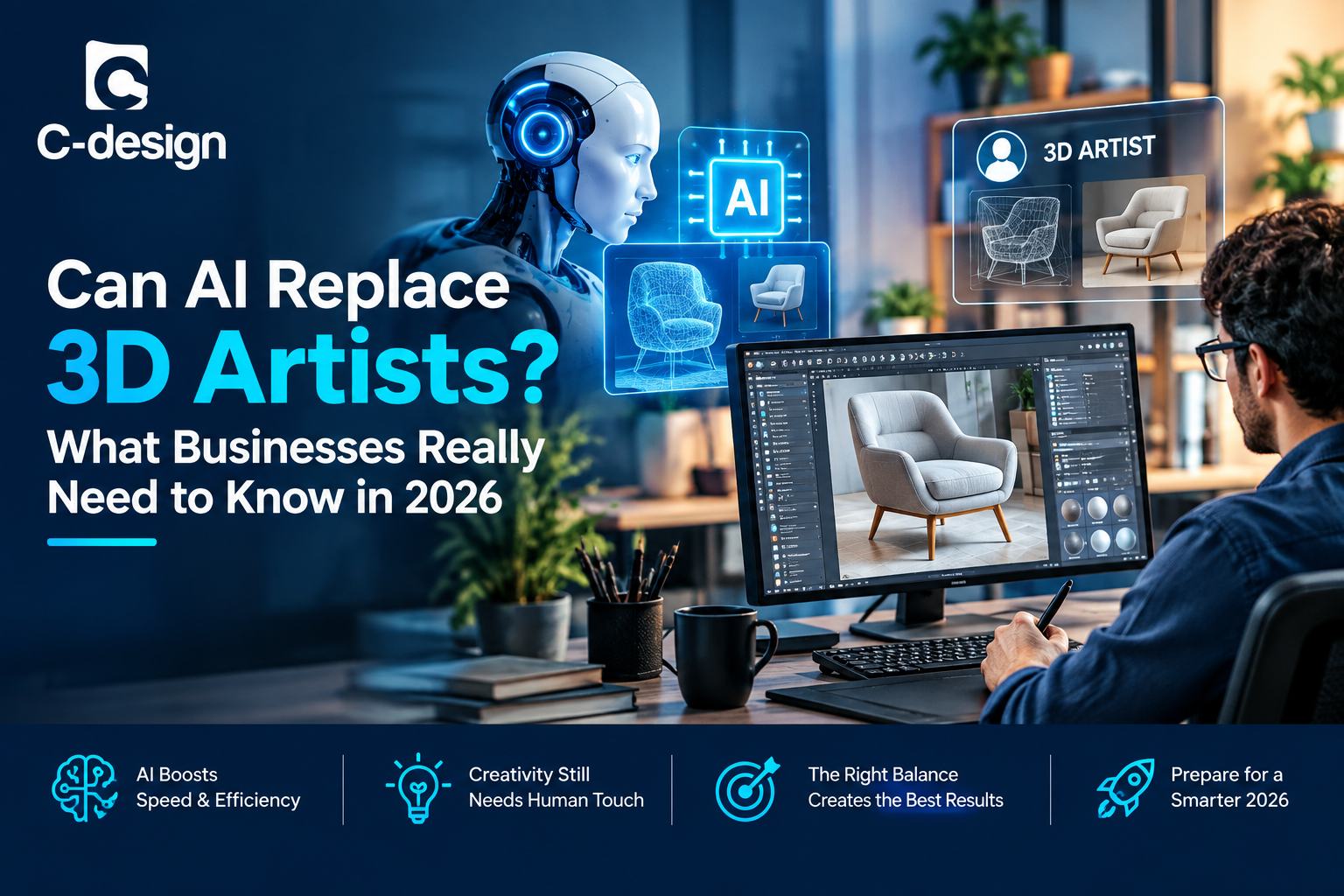
AI is not just a feature; it is a transformative co-pilot, automating repetitive tasks, accelerating complex workflows, and democratizing the creation of three-dimensional content. For industries reliant on digital twins, such as e-commerce, gaming, and manufacturing, AI integration is the key to achieving unprecedented speed, scale, and efficiency. This is particularly vital for firms utilizing Outsource 3D Modeling services, where efficiency directly translates to cost savings and faster delivery.
The impact of AI spans the entire workflow: from automatically generating initial meshes and applying sophisticated Texturing to optimizing models for real-time platforms like Augmented Reality – Virtual Reality (AR/VR). It fundamentally changes the job of the 3D artist, shifting the focus from manual polygon pushing to creative direction and data refinement.
I. The AI Fundamentals: Transforming the 3D Workflow
At its core, AI in 3D modeling is about automating the most repetitive, time-consuming, and calculation-heavy tasks. It allows human designers to focus on creative intent and high-level strategy, offloading the digital “grunt work” to intelligent algorithms.
1. Generative Design: AI as a Creative Partner
Generative AI is the engine behind entirely new modeling capabilities. Instead of directly manipulating vertices and edges, a designer provides AI with a set of constraints and goals (e.g., structural strength, material cost, optimal light exposure, or aesthetic style). The AI then generates hundreds or even thousands of optimal design variations that meet those criteria.
- Application in 3D Architecture: In 3D Architecture, AI can instantly optimize floor plans for efficiency, test façade designs against solar gain constraints, or generate complex structural lattices that minimize material usage.
- Application in 3D Product Design: For manufacturing and 3D Product Design, generative algorithms can optimize component geometry to be lighter, stronger, and ideally suited for 3D printing, achieving results a human designer would take weeks to manually iterate.
2. Scan-to-Model Automation
One of the most tedious processes in 3D is converting real-world data (like LiDAR scans or photogrammetry) into clean, usable 3D geometry. AI streamlines this process:
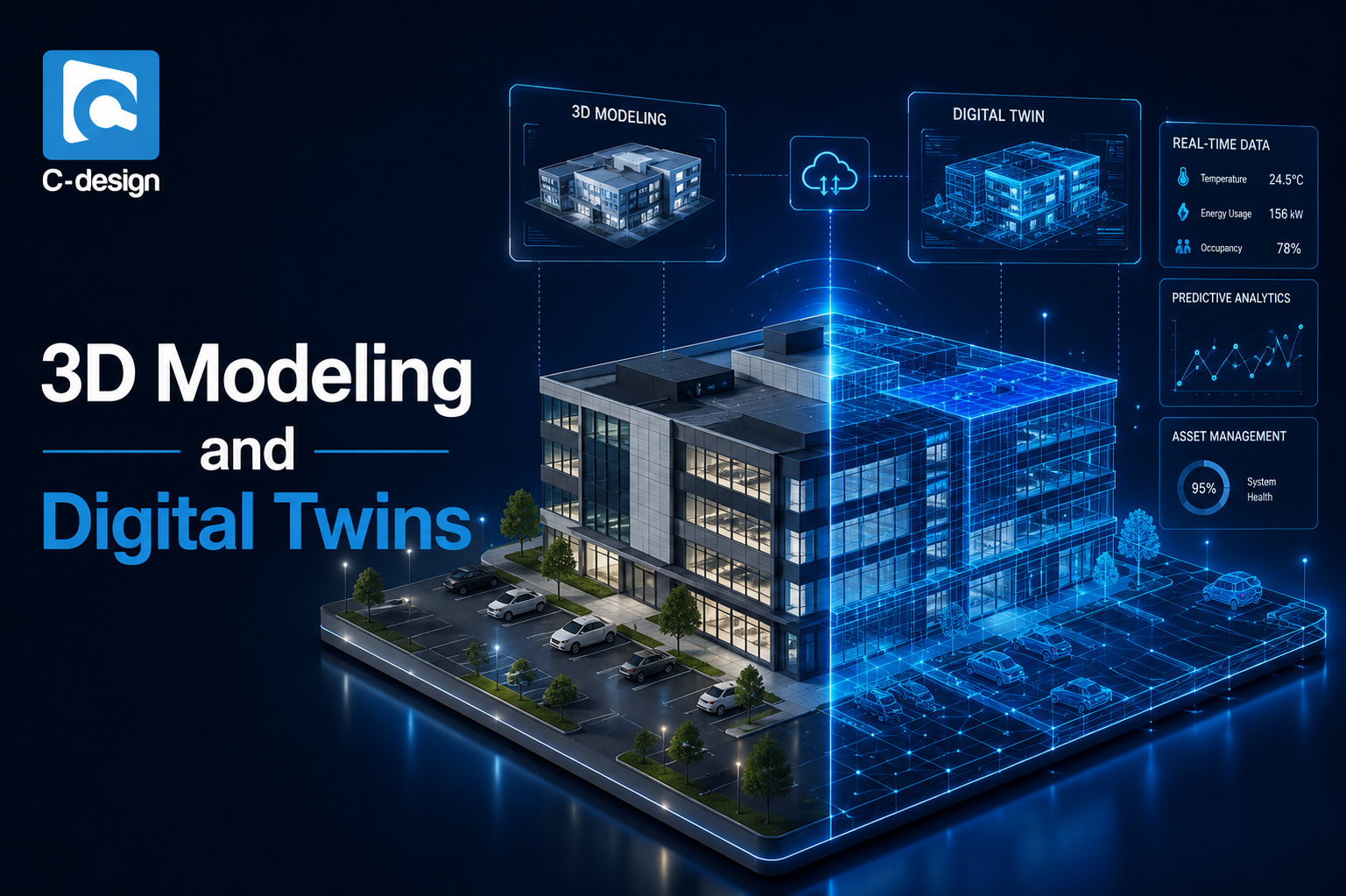
- Point Cloud Interpretation: AI algorithms are now adept at automatically recognizing features within massive point clouds—identifying walls, doors, pipes, and furniture—and converting that chaotic data into organized, semantic BIM models. This dramatically accelerates projects like creating “Digital Twins” of existing structures.
- Topology and Retopology: AI-driven retopology tools automatically clean up messy, high-polygon meshes generated by scans, creating simplified, organized geometry suitable for production, 3D Rendering, and real-time use in Augmented Reality – Virtual Reality applications.
II. AI in Specialization: Focus on Furniture and Product Modeling

The impact of AI is particularly transformative in high-volume, detail-oriented sectors like retail, e-commerce, and manufacturing.
1. Outsource 3D Furniture Modeling: From Photo to Final Asset
For retailers and manufacturers that frequently Outsource 3D Furniture Modeling, AI offers an unparalleled advantage in speed and consistency.
- Automated Asset Creation: Start-ups and dedicated Outsource 3D Modeling services are leveraging AI to automate the creation of photorealistic furniture models from simple 2D photographs. The AI analyzes the image, infers geometry, and generates an initial 3D model, drastically cutting the manual modeling time.
- Material and Texturing Automation: The most significant time-saver is in Texturing. AI can analyze high-resolution fabric swatches, wood grains, or leather samples and automatically generate PBR (Physically Based Rendering) texture maps (color, normal, roughness, metallic) that ensure realism during 3D Rendering. This guarantees that the final digital catalog asset perfectly matches the physical product, a non-negotiable requirement for e-commerce.
2. Enhancing 3D Product Design Workflows
In the realm of 3D Product Design, AI is moving beyond simple modeling to affect the entire lifecycle:
- Design Compliance and Validation: AI can instantly check a newly designed 3D model against thousands of pre-set manufacturing rules (e.g., injection molding feasibility, wall thickness, assembly clearance) and highlight potential flaws, shifting validation from the end of the process to the initial design stage.
- Rapid Prototyping Visualization: AI-enhanced rendering speeds mean that a designer can make a small geometric change and receive a photorealistic 3D Rendering result in minutes instead of hours. This rapid feedback loop allows for far more design iterations in a fraction of the time.
III. AI and the Visual Revolution: Rendering and Immersive Tech
AI’s impact is perhaps most visible in the final presentation of the model, specifically in the quality and speed of visualization and its application in immersive environments.
1. Revolutionizing 3D Rendering
AI is solving the historic bottleneck of rendering—the time-consuming calculation of light paths and shadows:
- AI Denoising: Traditional ray-tracing generates “noise” that requires hours of sampling to eliminate. AI denoising tools use machine learning to instantaneously remove this noise from low-sample renders, delivering high-quality, clean final images in a fraction of the time. This massive time saving fundamentally alters the economics of professional 3D Rendering and architectural visualization.
- Smart Lighting and Composition: AI can analyze a scene and suggest optimal lighting setups or camera angles based on aesthetic principles or client preferences, enhancing the visual impact of any 3D Architecture or product visualization.
2. The Future is Real-Time: Augmented Reality – Virtual Reality
The primary challenge for Augmented Reality – Virtual Reality (AR/VR) models is optimization. Models must be low-polygon, correctly scaled, and run smoothly in real-time environments. AI is the critical tool for this optimization:
- Automated LOD Generation: AI can automatically generate multiple Levels of Detail (LODs) for a single master asset. This means the same model can be used for a high-fidelity 3D Rendering (LOD 0) and an optimized mobile AR viewer (LOD 3) without manual conversion, making models instantly deployable for Augmented Reality – Virtual Reality platforms.
- Semantic Segmentation: For AR applications, AI can accurately analyze a user’s camera feed to understand the real-world environment (e.g., identifying a floor, a wall, or a table). This allows a model, such as a piece of furniture provided by an Outsource 3D Furniture Modeling firm, to be instantly and realistically placed on a surface with accurate shadows and perspective.
IV. Strategic Implications for Businesses and Outsource 3D Modeling Services
The rise of AI isn’t about replacing human designers; it’s about shifting the value proposition of 3d modeling and design. For businesses seeking to leverage this technology, the focus must be strategic.
1. Redefining the Value of 3D Modeling Services
In the past, the cost of Outsource 3D Modeling services was heavily weighted toward the time spent on manual modeling and detailing. With AI automating these tasks, the value shifts to:
- Data Integrity and Curation: The quality of the AI output depends entirely on the quality and organization of the input data (textures, scans, constraints). Expert Outsource 3D Modeling services now specialize in curating, managing, and preparing this data for AI ingestion.
- Creative Oversight and Refinement: Human designers remain crucial for artistic judgment, ensuring the AI-generated output aligns with brand ethos, client feedback, and market aesthetics.
2. The Competitive Edge in 3D Architecture and Product Design

Firms that successfully integrate AI into their workflows gain a massive competitive advantage:
- Faster Project Delivery: Reduced iteration and rendering times mean that 3D Architecture firms can deliver complex visualizations and design options in days instead of weeks.
- Increased Iteration Capacity: The ability to rapidly generate and test dozens of design permutations ensures the final 3D Product Design is truly optimal—not just the best design achievable within a tight deadline.
V. The Future is Collaborative: AI, Texturing, and the Human Element
The future of 3d modeling and design is a seamless collaboration between human expertise and algorithmic power. AI handles the complexity and the repetition; the human provides the vision, the brand narrative, and the final artistic polish.
For companies looking to scale their digital content production, partnering with an expert in Outsource 3D Modeling services who has already integrated AI into their pipelines is the most effective path forward. Whether it’s producing a catalog of hyper-realistic assets via Outsource 3D Furniture Modeling, or developing complex, optimized models for Augmented Reality – Virtual Reality experiences, AI is the tool that unlocks speed, accuracy, and true innovation.
AI is not a replacement for the human designer but an unparalleled co-pilot that offers speed, scale, and unprecedented conceptual freedom. It has injected a new level of efficiency into the entire creative process, accelerating 3D Product Design iterations, minimizing the cost of high-quality 3D Rendering, and unlocking immersive customer experiences through flawless Augmented Reality – Virtual Reality deployment.
Frequently Asked Questions (FAQ)
1. How does AI specifically speed up the 3D modeling process?
AI primarily speeds up the process by automating repetitive and time-consuming tasks like Texturing (generating PBR maps from photos), retopology (cleaning up scan data), and denoising in 3D Rendering, which drastically cuts down post-production time.
2. What is Generative Design and how is it used in 3D Architecture?
Generative Design is an AI process where a designer sets constraints (e.g., structural performance, solar exposure, material cost). The AI then automatically generates hundreds of design options and complex geometries, allowing 3D Architecture firms to quickly find the optimal, high-performing design solution.
3. Is AI replacing human designers in 3D Product Design?
No, AI is augmenting human designers. AI handles complex data processing and repetitive tasks (like automated compliance checks and rendering), allowing the human designer to focus on creative intent, strategic decisions, and the crucial artistic refinement of the final 3D Product Design.
4. How does AI assist with Outsource 3D Furniture Modeling for e-commerce?
AI can rapidly create an initial 3D model from simple 2D photographs of furniture. Crucially, it automates the creation of high-quality, realistic texture maps from material swatches, ensuring the digital asset is an accurate representation required for high-quality 3D Rendering catalogs.
5. What is the role of AI in creating content for Augmented Reality – Virtual Reality?
AI ensures real-time performance by automatically optimizing complex models. This includes generating multiple Levels of Detail (LODs) and ensuring geometry is clean and low-poly, making the Augmented Reality – Virtual Reality models suitable for mobile or headset viewing.
6. If I Outsource 3D Modeling services, should I look for AI capabilities?
Yes. Choosing an Outsource 3D Modeling services partner with integrated AI in their pipeline means they can deliver projects significantly faster, achieve higher precision in Texturing and model optimization, and provide more design iterations, maximizing the return on your 3d modeling and design investment.
Related Blogs
Art assets in different styles like 2D art for interactive applications, Games, and UI. We are having more than 15 years of experience