Best Outsource 3D Modeling Service Provider: C-design
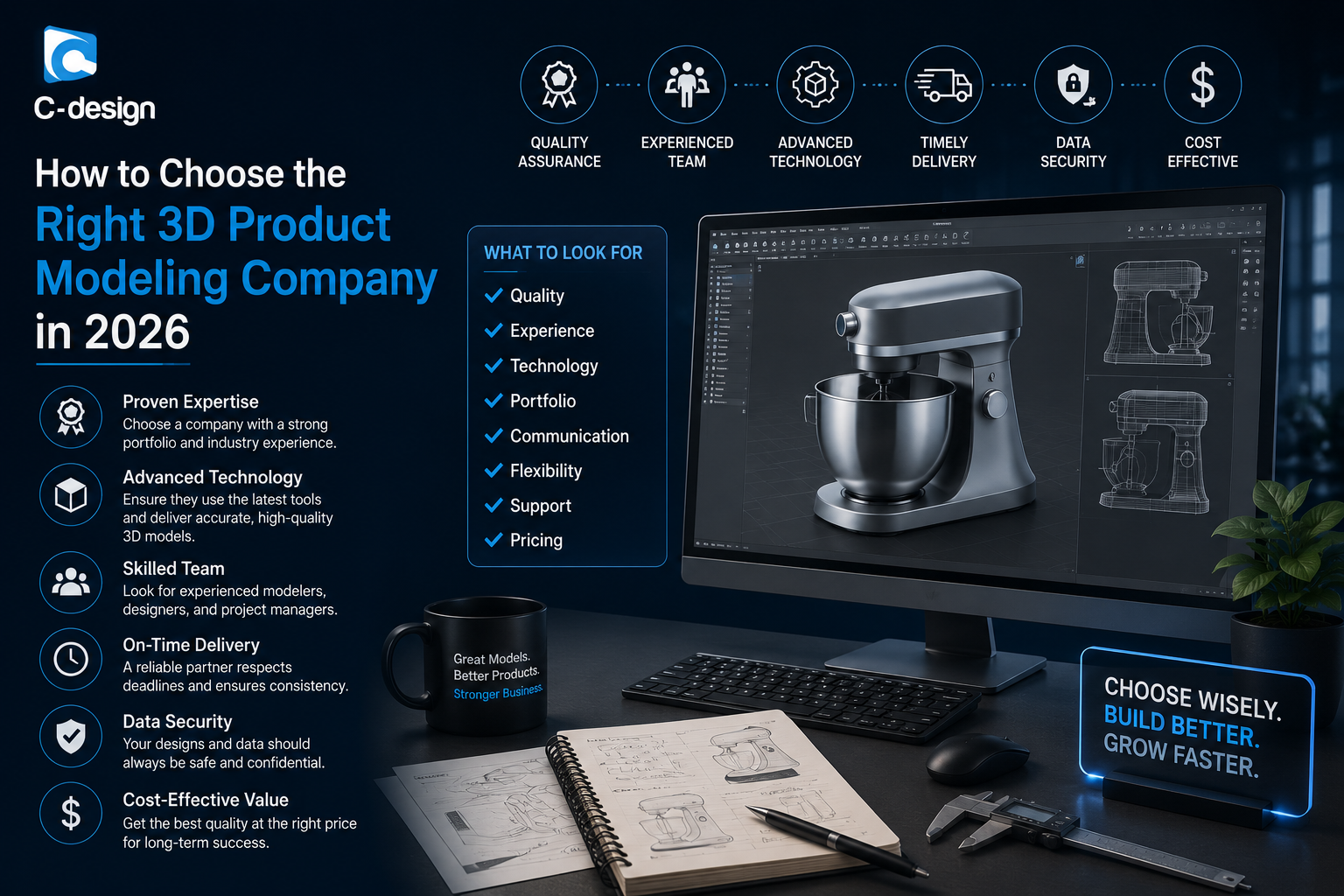
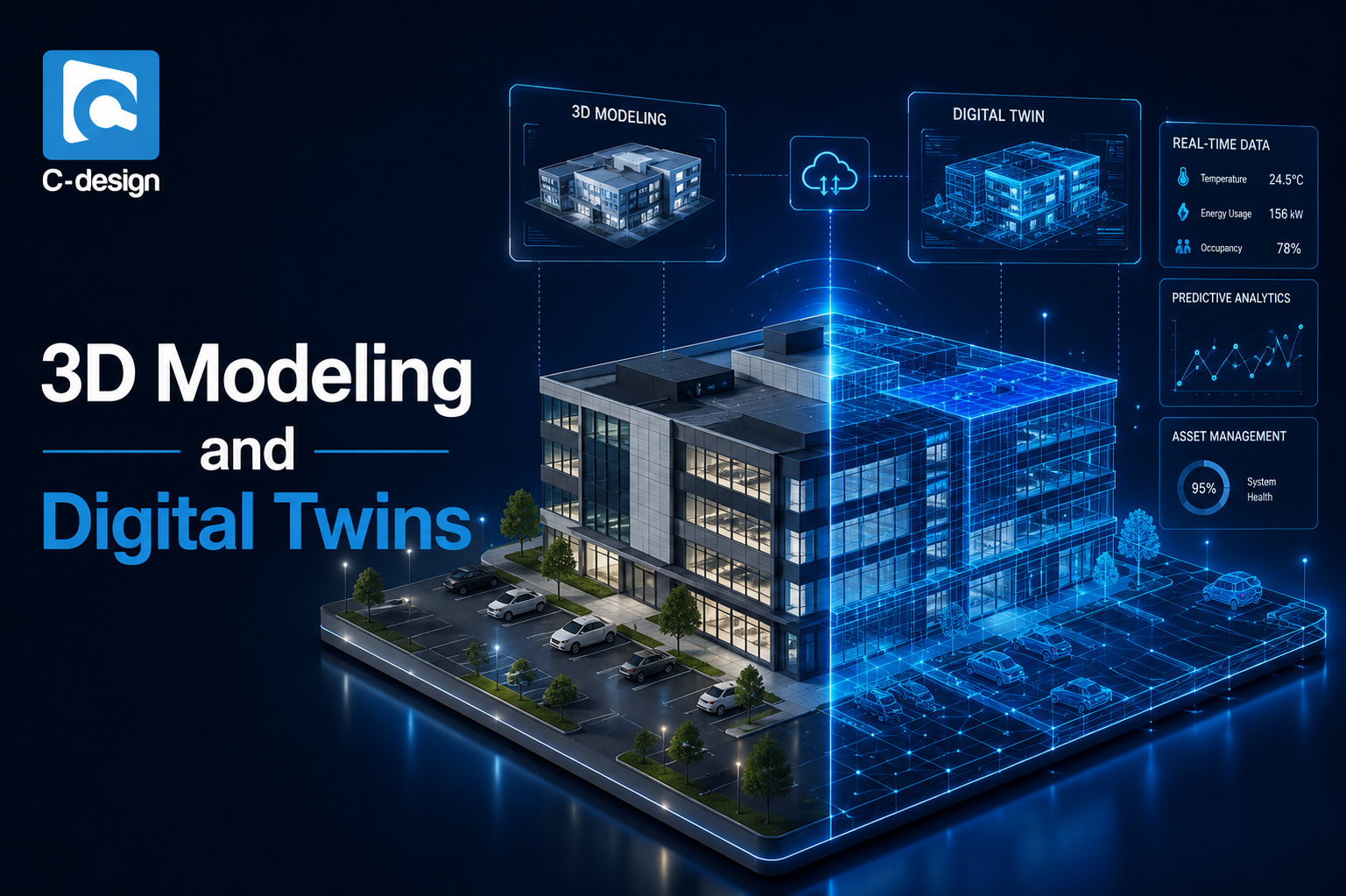
Choosing the best outsource 3D modeling service provider isn’t about finding the cheapest quote — it’s about finding a team that can turn a rough brief into presentation-ready, production-accurate models without three rounds of confused revisions. With hundreds of studios, freelance marketplaces, and offshore agencies competing for your project, the real challenge is telling a genuinely capable partner apart from one that just has a polished portfolio page.
This guide breaks down exactly what to look for, the red flags that predict a painful project, and how the strongest outsource 3D modeling services providers structure their process differently from everyone else.
Why So Many Companies Outsource 3D Modeling
Before comparing providers, it helps to be clear on what you’re actually buying. Businesses outsource 3D modeling for three consistent reasons:
- Cost efficiency — a dedicated outsourced team costs a fraction of hiring, training, and equipping an in-house department with the same output capacity.
- Speed and scalability — you can scale from one model to fifty without a hiring cycle, and reputable providers run parallel teams so deadlines don’t slip when volume spikes.
- Access to specialized skill — architectural visualization, furniture modeling, AR/VR-ready assets, and game-ready characters each demand different technical skillsets that are expensive to maintain internally.
The providers worth hiring are the ones that treat these as a package — not just cheap labor, but a repeatable, quality-controlled workflow.
7 Criteria That Separate the Best Providers From the Rest
1. Portfolio Depth in Your Category
A generalist portfolio with a few nice renders isn’t the same as deep, repeated experience in your specific niche — furniture, architecture, product visualization, or game assets. Ask for 3–5 recent examples in your exact category, not just their best all-time work.
2. A Documented Process, Not Just a Sales Pitch
The best providers can describe their workflow step by step: brief intake → concept/blockout → client review → refinement → final delivery in your required formats. If a provider can’t clearly explain how revisions are handled or how many rounds are included, that’s a planning gap that will surface mid-project.
3. Format and Software Compatibility
Confirm upfront that the provider works natively in the software your pipeline needs — 3ds Max, SketchUp, Revit, SolidWorks, Blender, or Unreal/Unity-ready exports. A provider that has to “convert” everything after the fact introduces quality loss and delay.
4. Realistic, Transparent Pricing Models
Look for providers offering multiple engagement models — fixed-price for well-defined projects, time-and-materials for evolving scope, and dedicated/staff-augmentation for ongoing volume. Vague, one-size-fits-all pricing usually means hidden revision or scope fees later.
5. Communication and Time Zone Overlap
Even the most skilled modeling team is a liability if you can’t get timely answers during your working hours. Ask about dedicated project managers, response-time commitments, and whether you’ll speak with the actual modeler or only a go-between.
6. IP Protection and Data Security
Your designs are commercially sensitive. Reputable providers sign NDAs as standard, not on request, and can describe concrete data-handling practices — not just a boilerplate confidentiality clause.
7. Verifiable Client Results
Named testimonials, case studies with measurable outcomes (fewer revision cycles, faster time-to-market), and third-party reviews carry far more weight than a generic “trusted by clients worldwide” claim with no specifics attached.
What Makes C-Design Different From Other 3D Modeling Service Providers
Measured against the criteria above, here’s where C-Design sets itself apart:
- Two decades of focused experience, not a generalist portfolio. C-Design has been a dedicated outsourced 3D modeling partner since 2005 — 20+ years in architecture, furniture, and product visualization specifically, rather than spreading across unrelated categories.
- Scale with continuity. A team of 300+ professionals means projects aren’t dependent on a single freelancer’s availability, and 500+ delivered projects across 140+ clients gives a track record that’s actually verifiable, not just claimed.
- A structured, technology-driven workflow. C-Design has built custom in-house toolsets on top of industry-standard software (3ds Max, SketchUp, Revit, and more) specifically to speed up model generation and texture creation — the kind of documented process criterion #2 above calls for, not an ad-hoc pipeline.
- Early, practical adoption of AI in the workflow. Rather than treating AI as a buzzword, C-Design integrates AI tools into modeling and visualization workflows to cut turnaround time while holding quality constant — directly addressing the speed/cost tradeoff most buyers worry about.
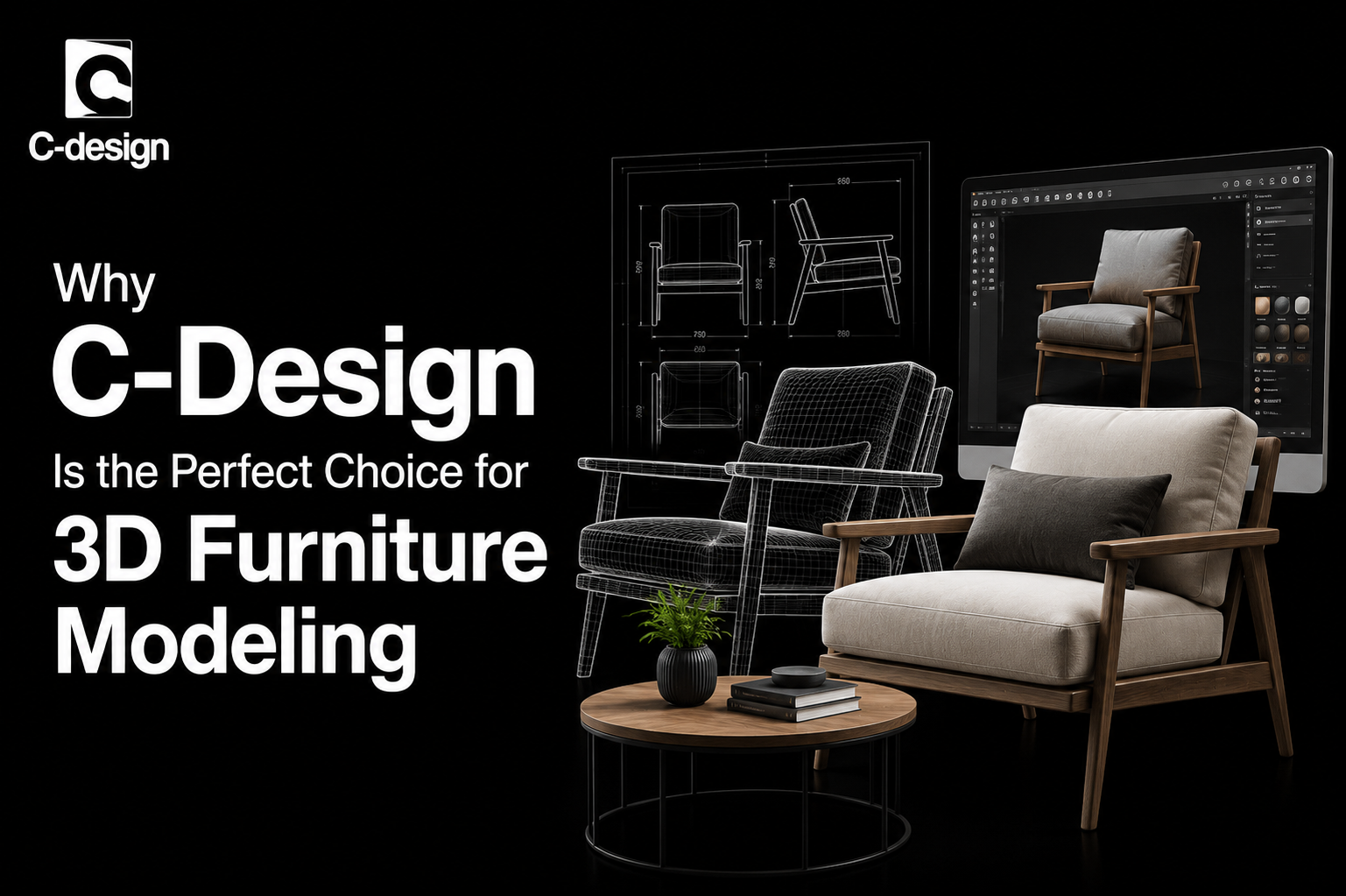
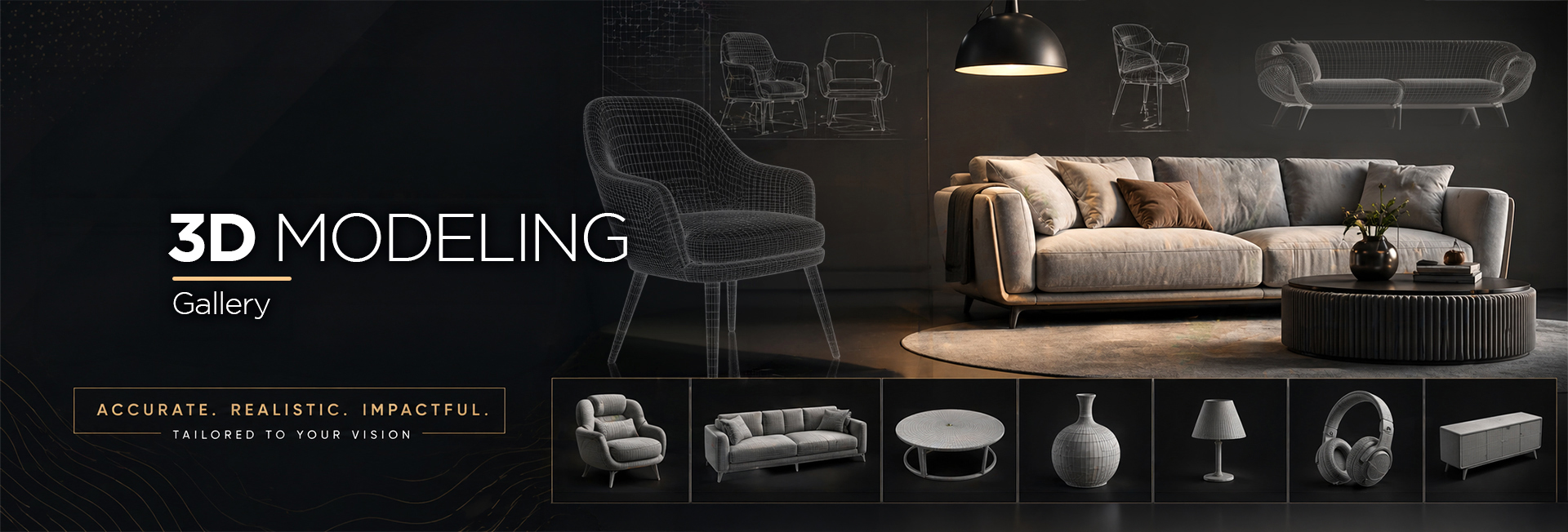
- Category depth across the services buyers actually search for. Dedicated service lines for 3D furniture modeling, architectural modeling, AR/VR-ready models, game assets, and product visualization mean the team working on your project has repeated, specific reps in your category — not a first attempt.
- International accreditation and dual-region presence. With operations spanning India and the UAE and a global client base across the US and UK, C-Design combines cost efficiency with the accountability of an established, accredited company rather than an anonymous offshore vendor.
If category-specific experience, verifiable delivery volume, and a documented, technology-driven process are what you’re screening providers for, C-Design is built to meet exactly that bar.
Red Flags to Watch For
- Quotes that are dramatically lower than every other provider you’ve contacted — quality and revision support are usually where the corners get cut.
- No clear point of contact once the project starts.
- Reluctance to sign an NDA before sharing project details.
- Portfolios that can’t be traced to verifiable, named client work.
- No mention of file formats or software compatibility until after you’ve paid a deposit.
Questions to Ask Before You Sign
- How many rounds of revisions are included, and what happens beyond that?
- Can you share 2–3 references from clients in our industry?
- What’s your average turnaround for a project of our scope?
- Who is our direct point of contact, and what’s the expected response time?
- What formats and software versions do you deliver in natively?
FAQs
1. What does it cost to outsource 3D modeling services?
Pricing varies by complexity, but most providers offer three models: fixed-price for well-defined single projects, hourly/time-and-materials for evolving scope, and dedicated team/staff-augmentation for ongoing volume. Get quotes under the same model from each provider so you’re comparing like for like.
2. How long does an outsourced 3D modeling project take?
Turnaround depends on complexity and revision rounds, but a straightforward product or furniture model typically takes a few days to two weeks, while large architectural or game-asset projects can run several weeks. Ask for a timeline tied to your specific brief, not a generic average.
3. Which file formats should a good provider support?
At minimum, native compatibility with the software your pipeline already uses — 3ds Max, SketchUp, Revit, SolidWorks, Blender, or Unreal/Unity-ready exports. A provider that converts everything after the fact risks quality loss and extra delay.
4. How many revision rounds are normal?
Most reputable providers include two to three rounds of revisions in their standard scope, with clearly priced additional rounds beyond that. If a provider can’t state this upfront, treat it as a planning gap.
5. How do I make sure my designs stay protected?
Look for providers that sign an NDA as standard practice, not only when asked, and that can describe concrete data-handling steps rather than a boilerplate confidentiality clause.
6. What’s the difference between a freelance marketplace and a dedicated 3D modeling company?
Marketplaces (Fiverr, Upwork, CGTrader) give you access to individual freelancers at variable quality and availability. A dedicated company brings a managed team, consistent quality control, a single point of contact, and continuity if a specific artist is unavailable — usually at a premium but with far less project risk.
7. How do I verify a provider’s claims before committing budget?
Ask for 2–3 references from clients in your specific industry, request examples that can be traced to named client work, and check third-party review platforms (Clutch, Google Reviews) rather than relying on testimonials shown only on the provider’s own site.
Conclusion
The best outsource 3D modeling service provider for your business is the one whose process, portfolio depth, and communication style match your specific project — not necessarily the one with the biggest name or the lowest quote. Providers with decades of focused experience in a particular category (furniture, architecture, product design) will typically outperform generalists on both quality and revision efficiency, even when their day rate is comparable.
If you’re evaluating outsourced 3D modeling partners for architecture, furniture, product visualization, or AR/VR-ready assets, look for a team that can show — not just claim — a structured process and category-specific track record before you commit budget.
Have a project in mind? Get in touch to discuss scope, timelines, and pricing for your specific 3D modeling needs.
Tags:
Outsource 3D Modeling, 3D Modeling Services, 3D Modeling Outsourcing Company, Furniture 3D Modeling, Architectural 3D Modeling, Product Visualization, AR/VR 3D Models, 3D Modeling for Manufacturing
Related Blogs
Art assets in different styles like 2D art for interactive applications, Games, and UI. We are having more than 15 years of experience