An exceptional idea deserves more than a rough sketch. It deserves a clear, convincing visual that helps people understand its form, purpose, and value. Professional 3D modeling and design services bridge that gap, turning concepts into digital models that support design reviews, product presentations, marketing, and immersive experiences.
Whether you are developing furniture, launching a consumer product, presenting an architectural concept, or building a digital experience, the right modeling partner helps you move forward with greater clarity. Outsource3dmodeling.com brings together creative visualization and industry-focused modeling services to help businesses communicate ideas effectively.
This guide explores the services available, how a structured outsourcing workflow works, and what businesses should consider when commissioning accurate, useful, and visually appealing 3D assets.
What Are 3D Modeling Services?
3D modeling is the process of building a digital representation of an object, space, or environment. Unlike a flat illustration, a three-dimensional model describes form and depth, allowing the subject to be viewed from multiple angles.
The model can then be refined with textures, materials, lighting, and camera settings. Depending on the project, it may become a product rendering, animated sequence, architectural visualization, digital mock-up, or interactive asset.
A useful model is not simply attractive. It must suit its intended application. A detailed asset for a close-up advertisement requires a different approach from a lightweight model intended for a mobile product viewer.
That is why professional 3D design services begin with understanding the brief: what the model represents, who will use it, where it will appear, and what decisions it needs to support.
Meet Outsource 3D Modeling
Outsource3dmodeling.com operates under the C-Design banner. Its website states that the outsourced 3D modeling team launched in 2005 and lists 140+ satisfied clients, 500+ delivered projects, and 200+ professionals.outsourcingcadworks
The website presents capabilities in 3D modeling, furniture modeling, augmented reality models, virtual reality models, interactive 3D, 2D art, and visual effects. Its listed industries include furniture manufacturing, architecture, real estate, manufacturing, healthcare, film, gaming, industrial design, and engineering.outsourcingcadworks
For businesses seeking an outsourcing partner, this breadth offers a starting point for discussing connected visual requirements. The important next step is to confirm the exact deliverables, technical requirements, schedule, and review process for your project.
Start With Purpose and Audience
Before selecting a modeling style, define the problem your visuals need to solve. Are customers struggling to understand a product? Does a design team need to compare options? Do investors need a clearer picture of a proposed space?
Audience matters just as much. A consumer may respond to a realistic lifestyle scene, while a technical reviewer may need clean views showing proportions, components, and spatial relationships.
For example, a furniture brand launching a dining chair might require white-background catalog renders, close-up fabric views, and an interior lifestyle image. These outputs share a base model, but each communicates something different.
A clear purpose prevents unnecessary modeling effort and makes it easier to evaluate the final result. It also helps the team prioritize the features that matter most rather than adding detail without a practical reason.
Custom 3D Design Services
Custom 3D design services turn a specific brief into a purpose-built digital asset. Instead of adapting an unrelated stock model, the modeling team develops geometry around your product, concept, brand style, and presentation needs.
Inputs may include sketches, photographs, dimensions, CAD files, reference products, or written descriptions. Where information is incomplete, assumptions should be identified and approved before detailed work begins.
Typical applications include:
- Concept models for early design discussions
- Digital mock-ups for stakeholder presentations
- Branded display units and promotional objects
- Stylized illustrations and explanatory visuals
- Custom components for larger scenes
Custom modeling is especially helpful when an idea is new, unusual, or difficult to explain through existing imagery. It gives teams a shared visual reference that can evolve through feedback.
3D Product Modeling Services
3D product modeling creates the digital structure of a product. The work focuses on its shape, proportions, components, and visible features, establishing the foundation for later rendering or animation.
Accurate reference information is essential. Dimensions, multiple photographs, material descriptions, and close-up details help the modeler avoid guesswork and represent the product more faithfully.
For manufacturers and product designers, a model can support visual comparison before committing to presentation assets. For retailers, it can provide a reusable base for multiple product images and configurations.
However, a visualization model is not automatically suitable for manufacturing. If you require engineering tolerances, fabrication data, or production-ready CAD geometry, define those requirements separately and confirm that they are included in the scope.
Product Rendering That Builds Understanding
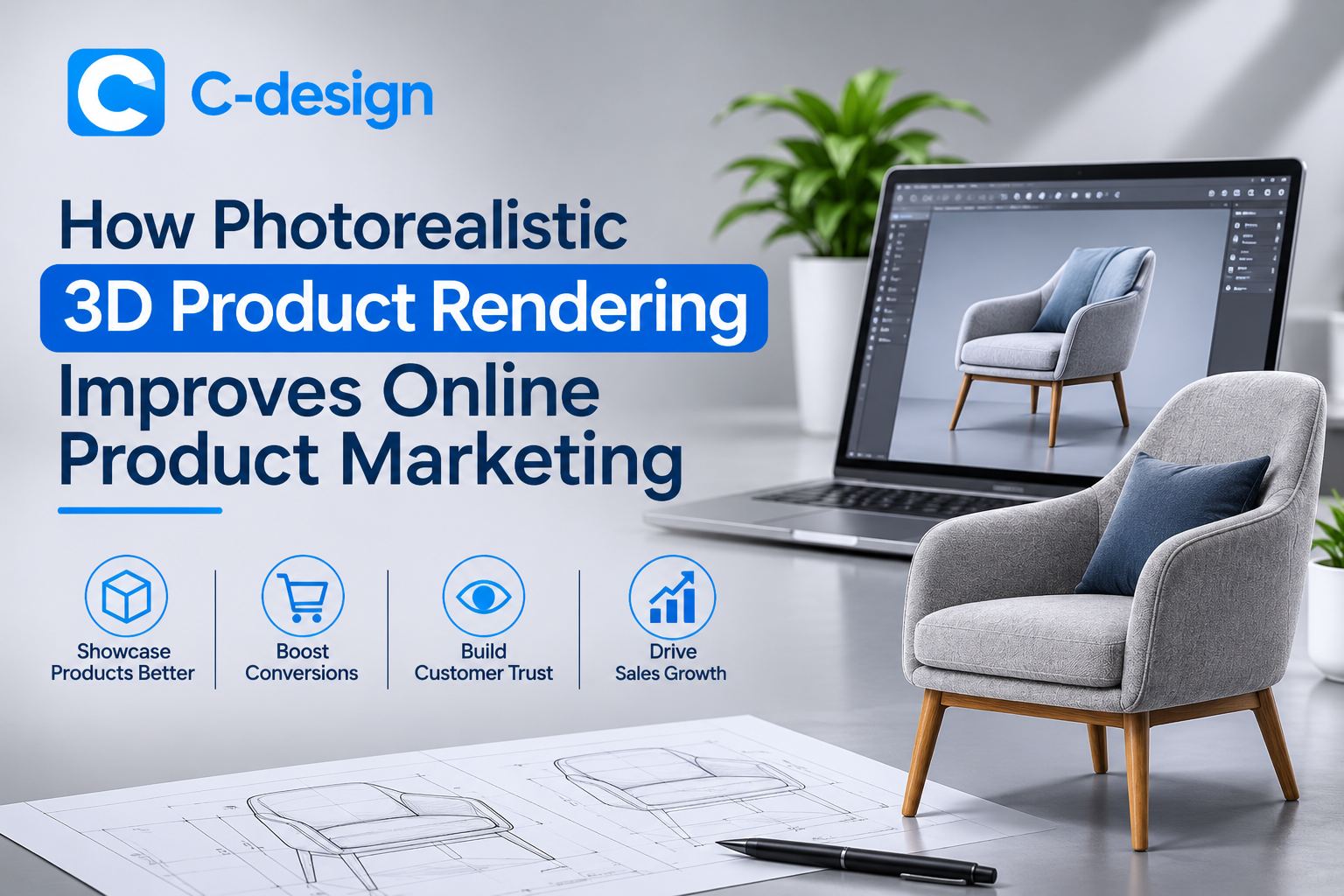
3D product rendering transforms a model into a finished image through materials, lighting, composition, and camera placement. Modeling establishes the object; rendering determines how viewers experience it.
Photorealistic rendering aims to recreate the appearance of a photographed product. Stylized rendering may instead emphasize simplified shapes, a distinctive visual identity, or a particular feature.
Useful deliverables include:
- White-background images for product listings
- Lifestyle scenes for websites and campaigns
- Detail views highlighting finishes and construction
- Color and material variations
- Product displays for presentations and catalogs
A reusable model can make consistent image production easier across a product range. When the geometry remains unchanged, approved material variants or new camera angles may be developed without rebuilding the entire asset.
3D Texturing Services
A model can have the correct shape and still look unconvincing. 3D texturing services add the surface information that helps communicate what the object is made from and how it reacts to light.
Wood grain, fabric weave, brushed metal, leather, glass, and painted finishes each need a different treatment. Texture scale and orientation also matter: oversized stitching or incorrectly aligned grain can make an otherwise strong image feel unrealistic.
Texturing should reflect the intended viewing distance and platform. A close-up furniture render may require more surface detail than a small object in a large architectural scene.
Where interactive delivery is required, texture resolution and material complexity should also be balanced against performance. The goal is convincing appearance without unnecessary file weight or avoidable loading delays.
3D Animation Services
Some ideas are easier to understand in motion. 3D animation services can show a product rotating, demonstrate a feature, explain an assembly sequence, or guide viewers through a space.
An effective animation begins with a communication plan rather than immediate production. The team should agree on the message, audience, sequence, duration, camera movement, and final format before detailed rendering starts.
Common applications include:
- Product turntables and launch videos
- Feature demonstrations and explainer sequences
- Exploded views showing component relationships
- Furniture movement and configuration demonstrations
- Architectural walkthroughs and flythroughs
A storyboard or preview animation provides a useful checkpoint. Reviewing motion and timing early is generally easier than changing a fully rendered sequence after production is complete.
3D Furniture Modeling Services
Furniture buyers and designers pay attention to proportion, materials, comfort cues, and craftsmanship. Professional 3D furniture modeling services help communicate these qualities through carefully developed digital assets.
Models may represent sofas, chairs, tables, cabinets, beds, shelving, and custom pieces. Depending on the brief, details can include upholstery seams, cushions, joinery, handles, legs, and visible hardware.
Outsource3dmodeling.com specifically presents furniture modeling as a service for bringing furniture designs to life through realistic digital models.outsourcingcadworks
For a furniture brand, the practical opportunity is a coordinated visual library. A single approved design can support a range of scenes, finishes, and camera angles, provided those outputs are planned and included in the project scope.
3D Architectural Services
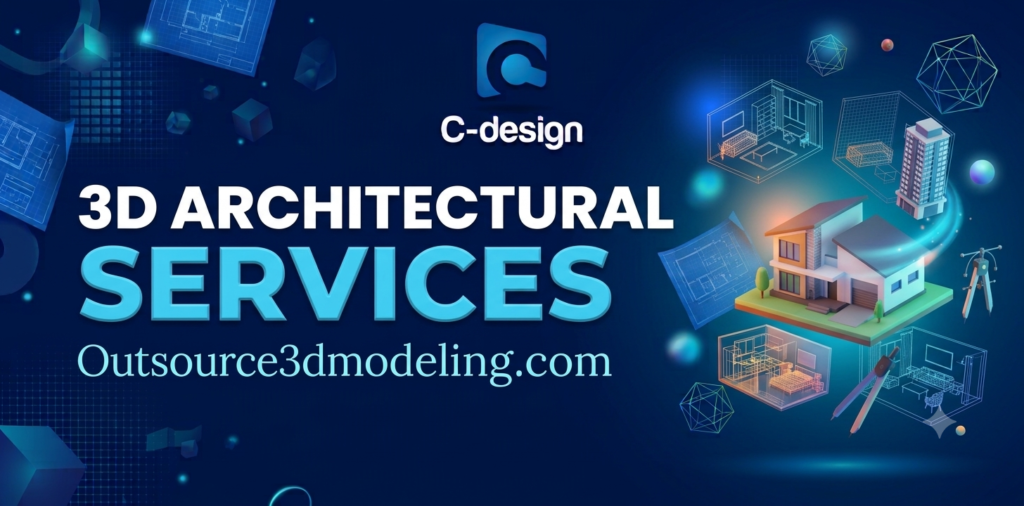
Architectural visualization helps people understand a space before it is built or renovated. Digital models and rendered views can communicate massing, room relationships, facade treatments, lighting, landscaping, and material choices.
Potential deliverables include exterior visualizations, interior renders, furnished layouts, conceptual site views, and architectural walkthroughs. Each should be developed from the latest approved references to reduce conflicting interpretations.
For architects, developers, and interior designers, the main value is clearer communication. Clients can compare options and discuss the atmosphere of a proposed space more easily when the concept is visible.
Presentation visuals do not replace construction documentation, engineering review, or regulatory approval. Their role should be defined clearly so that attractive imagery is not mistaken for a complete technical design package.
Models for Different Digital Experiences
Not every 3D asset should be built in the same way. A high-resolution marketing render, an animation asset, and an interactive model have different requirements for geometry, materials, and delivery.
Outsource3dmodeling.com lists augmented reality, virtual reality, and interactive 3D among its capabilities. These services are relevant when businesses want to explore experiences beyond static images.outsourcingcadworks
Before commissioning such work, confirm the target viewer or application, file formats, model scale, texture limits, and testing responsibilities. A model that looks excellent in a rendering application may need additional preparation before it works effectively in an interactive environment.
Discussing these requirements early helps avoid expensive rework near delivery and makes the final asset more useful to the team implementing it.
A Clear 3D Production Workflow
A structured process helps keep creative work aligned with business requirements. The following workflow is a practical framework to agree with your modeling partner, rather than a guarantee of a particular provider’s internal procedure.
Define the Brief
Share the product or design concept, intended audience, visual references, dimensions, and desired outputs. Include brand guidelines and examples of the visual quality you expect.
Confirm Scope and Deliverables
Agree on the number of models, views, variants, animation duration, file formats, resolution, milestones, and revision rounds. Clarify whether source files are included.
Review the Base Model
Check proportions, geometry, component placement, and major details before detailed texturing. Correcting structural issues at this stage avoids carrying mistakes into later work.
Approve Materials and Lighting
Review surface appearance, colors, texture scale, camera positions, and scene composition. Use consolidated feedback so the production team has one clear direction.
Check and Deliver
Evaluate the final output against the approved brief. Confirm naming, dimensions, appearance, file compatibility, and any agreed performance requirements before final acceptance.
Why Outsource 3D Modeling?
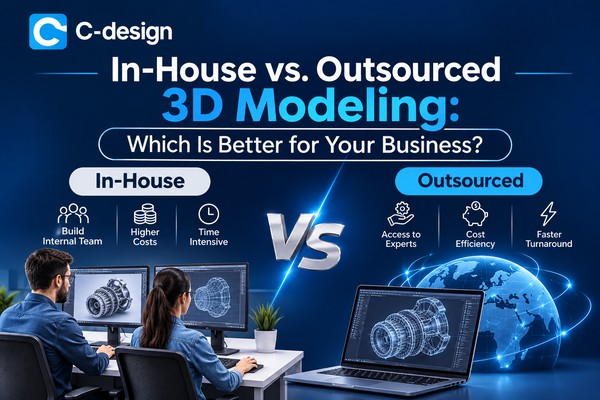
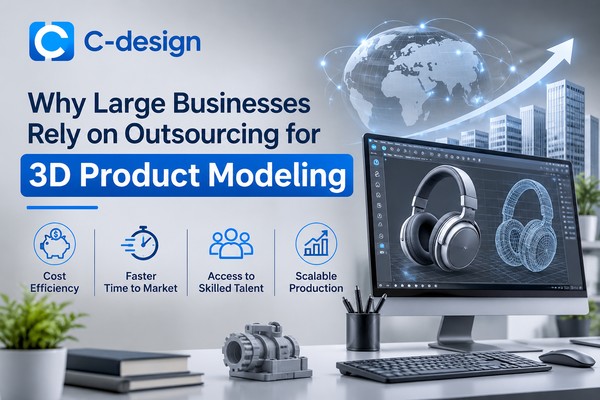
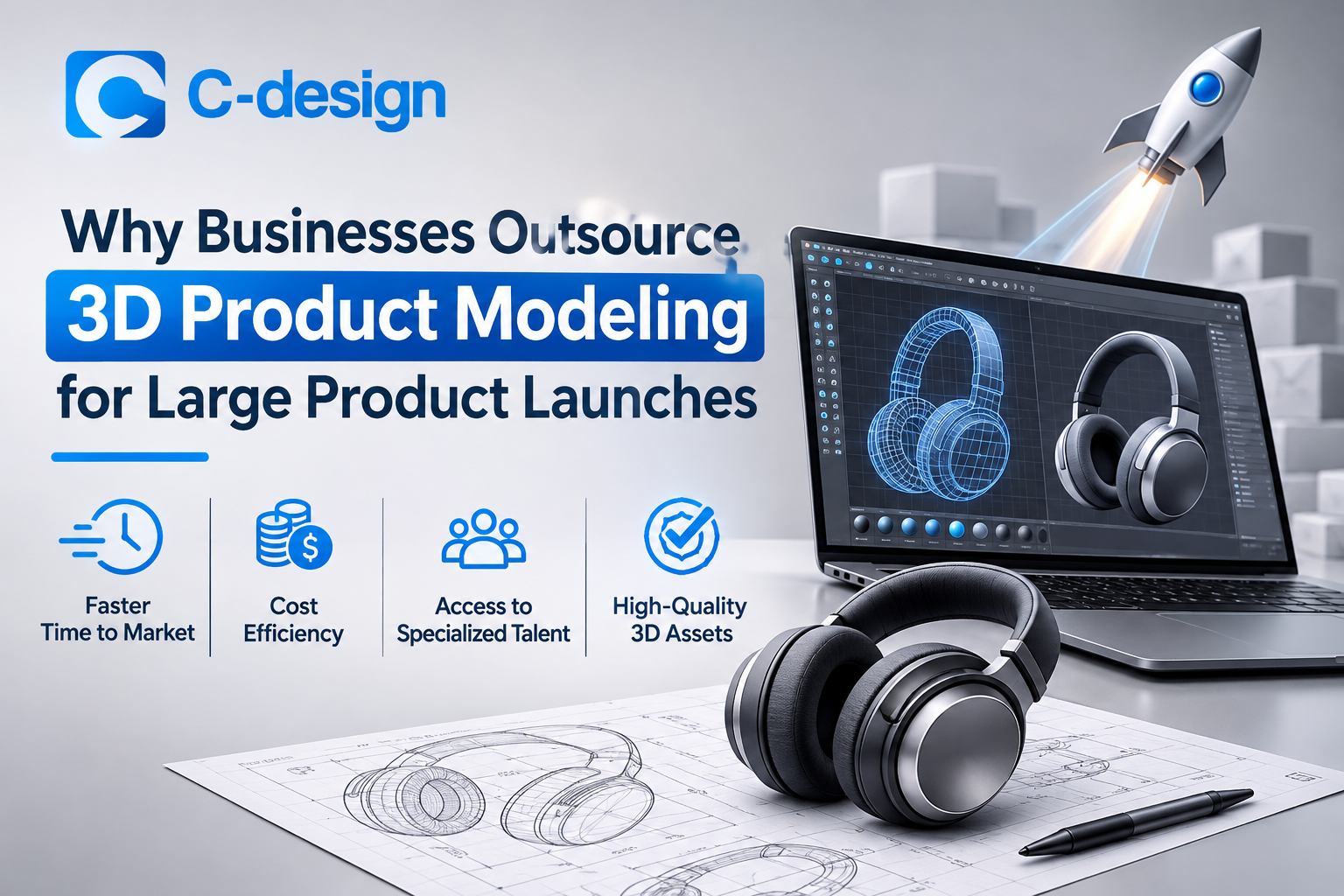
Outsourcing 3D modeling gives businesses access to external production capacity without building a full internal visualization department. It can be particularly useful for occasional projects, specialist work, or changing workloads.
Potential advantages include:
- Flexible capacity during product launches or busy periods
- Access to modeling and visualization skills
- More time for internal design and commercial priorities
- A defined project scope and clearer production budgeting
- Reusable assets for future visual requirements
Cost savings are not automatic. Results depend on project complexity, input quality, revision volume, and the level of realism required. A detailed brief and clear approval process are often more valuable than choosing the lowest initial quote.
How This Partner Can Help
Outsource 3D Modeling’s combination of modeling, furniture visualization, and immersive-content capabilities makes it a relevant option for businesses with varied digital presentation needs. Its website also identifies experience across multiple industries.outsourcingcadworks
For clients, the potential benefit is a connected conversation about the full visual journey: from an initial concept model to product imagery, animated communication, or an interactive experience.
Rather than treating every image as a separate task, plan how the underlying asset might be reused. Share upcoming requirements early so that geometry, naming, materials, and technical delivery can be discussed together.
This approach can support more consistent visuals and reduce duplicated effort. The exact advantages will depend on the agreed scope and the suitability of the model for each intended use.
Quality Beyond Attractive Images
A strong final image is important, but a professional modeling project needs more than visual polish. Quality should also be judged against the intended function of the deliverable.
For a product render, review proportions, finishes, branding, and image consistency. For an animation, check motion, timing, continuity, and message clarity. For an interactive asset, test the model in its intended environment.
Useful checks include:
- Correct units, scale, and orientation
- Clean, appropriate geometry
- Consistent materials and texture mapping
- Accurate labels and visible product details
- Agreed file formats and organized delivery
- Compatibility with the intended downstream workflow
Also clarify confidentiality, usage rights, source-file ownership, and permission to display the work in a portfolio. Resolving these points early creates a stronger working relationship.
Frequently Asked Questions
1. What are 3D modeling services?
3D modeling services create digital representations of products, objects, buildings, or environments. These models can support rendering, animation, visualization, and interactive experiences, depending on how they are built and prepared.
2. What inputs should I provide?
Useful inputs include sketches, dimensions, photographs from multiple angles, CAD drawings, material references, and examples of the desired visual style. Explain the intended use and identify which details must be reproduced accurately.
3. How do modeling and rendering differ?
Modeling creates the object’s digital shape and structure. Rendering produces finished images from that model using lighting, materials, and camera settings. Many product visualization projects need both services.
4. Can one model support several outputs?
Often, yes. An approved model can support multiple images, material variants, and animation scenes. However, interactive applications or close-up views may require additional optimization or detail, so discuss all planned uses upfront.
5. Why outsource furniture modeling?
Outsourcing provides additional capacity for developing furniture models and product visuals. It can help brands manage catalog production, explore finishes, and present collections while internal teams focus on design, merchandising, and customer requirements.
6. What affects cost and delivery time?
Complexity, reference quality, model count, realism, material variations, animation length, and revision requirements all influence effort. Request a scoped proposal that defines deliverables, milestones, review rounds, and any additional charges.
7. How do I start a project?
Contact Outsource3dmodeling.com with your references, target audience, intended platform, desired outputs, and deadline. Ask the team to review feasibility and provide a proposal covering the workflow, technical requirements, pricing, and delivery schedule.
Turn Your Idea Into Impact
Your next standout product deserves more than an ordinary visual.
Bring your sketches, product references, furniture concepts, or architectural ideas to Outsource 3D Modeling. Discuss a tailored approach to custom 3D design, product modeling, photorealistic rendering, texturing, animation, and architectural visualization.
Whether you need one compelling hero image or a coordinated collection of digital assets, start with a clear brief and a conversation about what success looks like.
Ready to make your vision impossible to overlook?
Connect with our 3D experts today—share your idea and request a personalized project quote.
Visit https://www.outsource3dmodeling.com/ to begin your next 3D modeling project.
Tags
Related Blogs
Art assets in different styles like 2D art for interactive applications, Games, and UI. We are having more than 15 years of experience