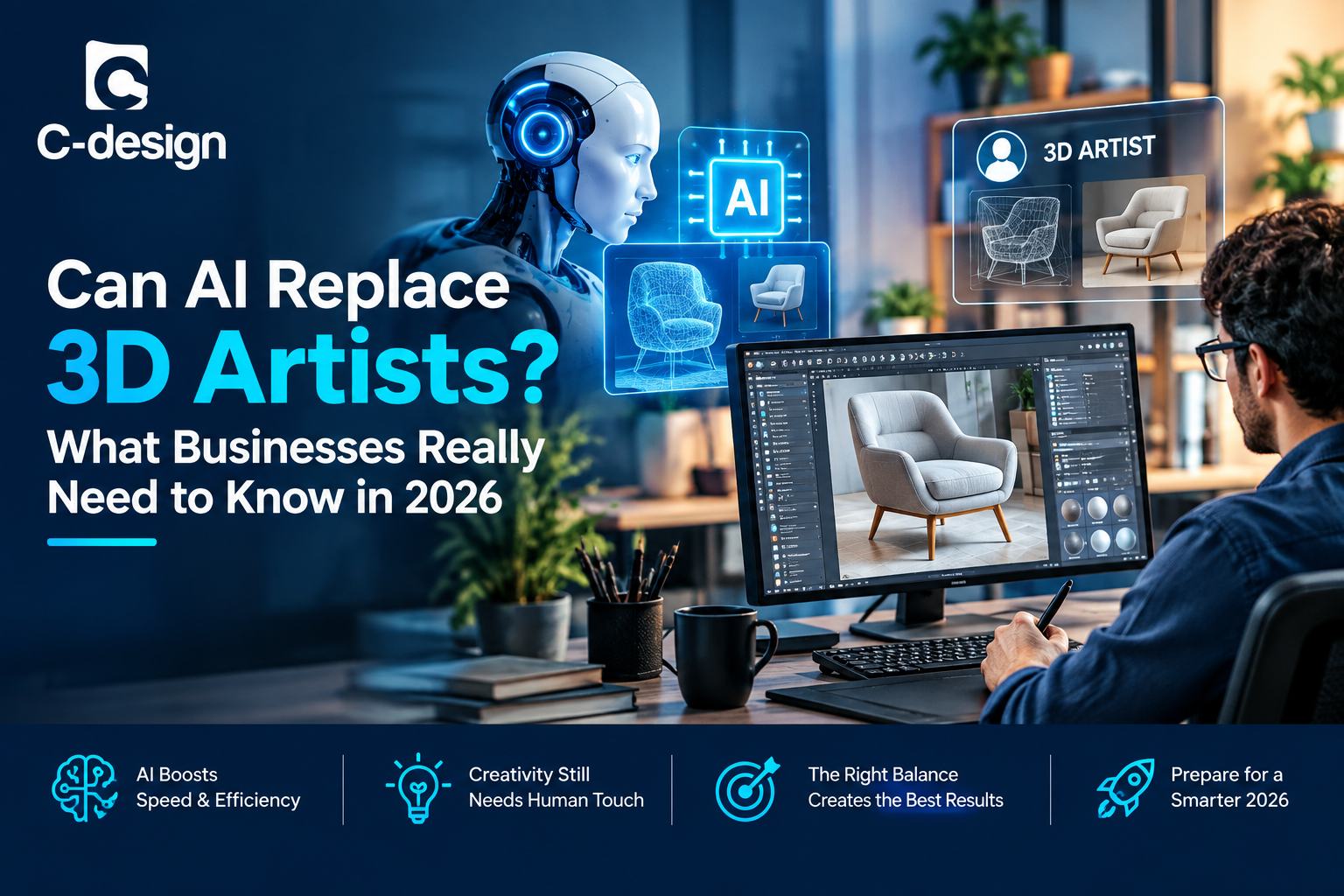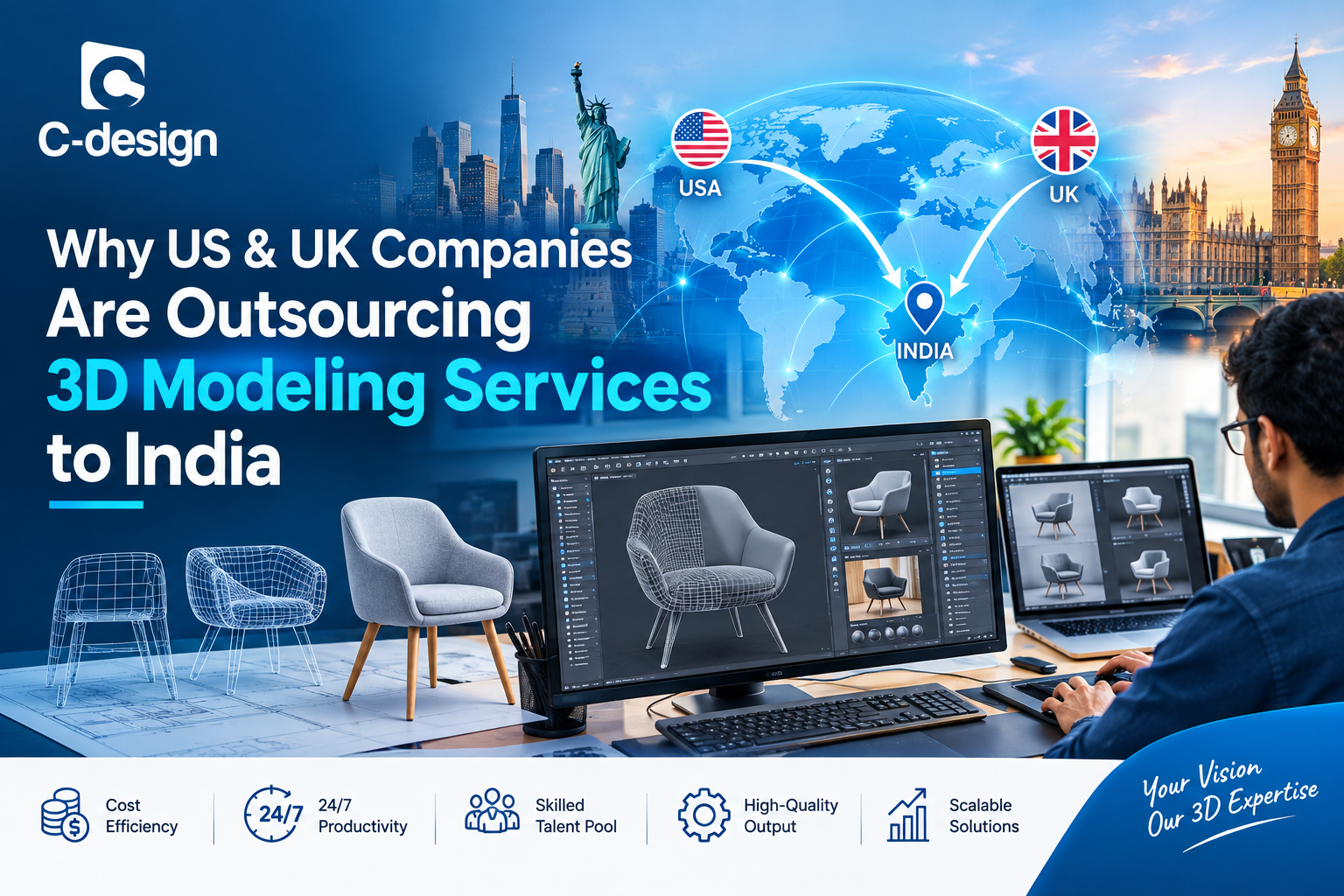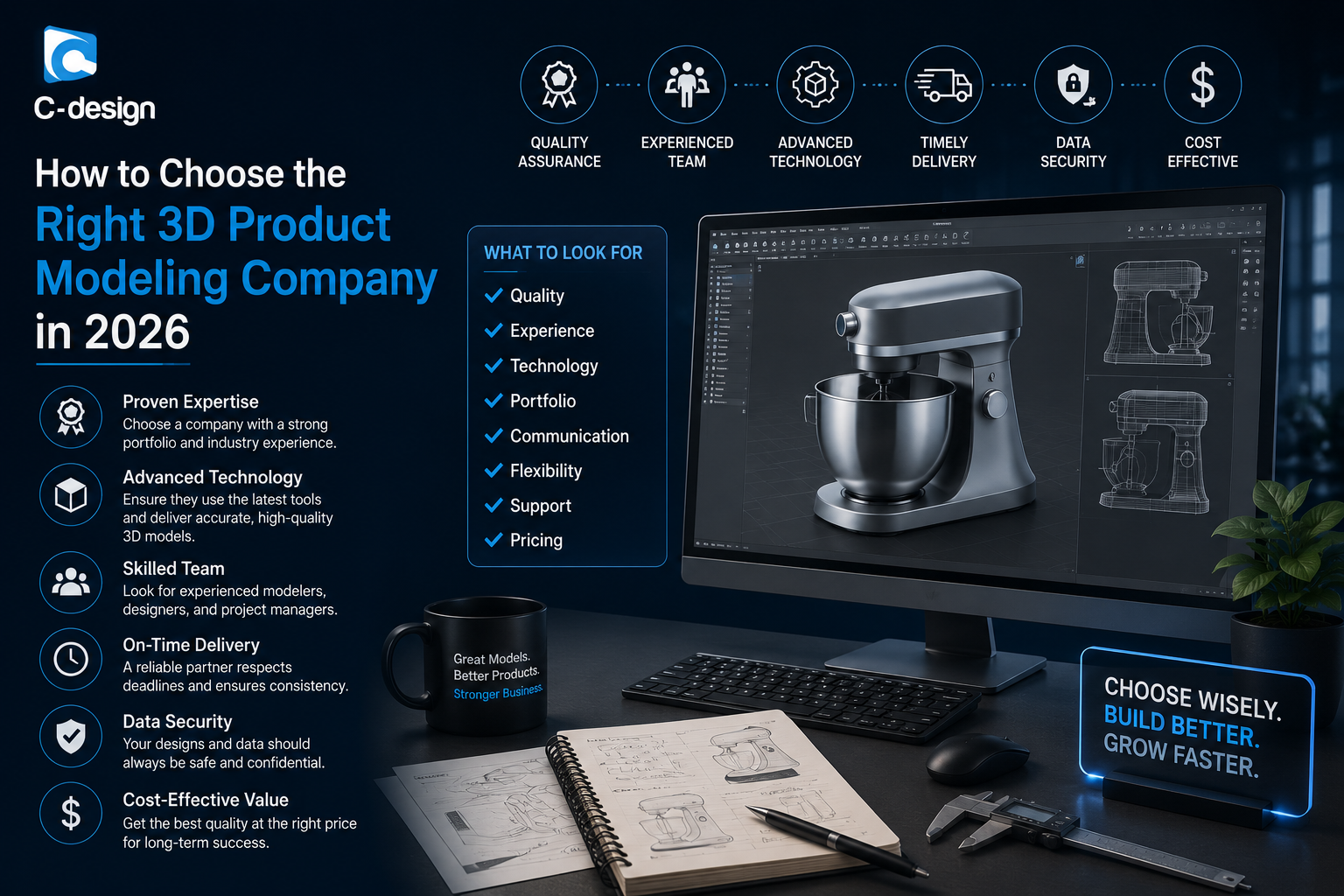
In the rapidly evolving digital landscape of 2026, the demand for high-fidelity visual content has transcended beyond simple aesthetics to become a core business necessity. From the intricate details of a bespoke armchair to the sprawling complexity of a modern architectural marvel, 3D modeling serves as the backbone of product development, marketing, and consumer engagement. As businesses in the US, UK, Germany, France, Australia, and New Zealand strive to maintain a competitive edge, the decision to Outsource 3D Modeling services has shifted from a mere cost-saving tactic to a strategic imperative for global excellence.
The Strategic Evolution: Why Outsource 3D Modeling Services?
The transition from traditional 2D drafting to sophisticated 3d modeling and design has revolutionized how industries conceptualize and sell their products. In the past, a simple blueprint or a flat sketch might have sufficed for a pitch, but today’s stakeholders demand an immersive experience. However, maintaining an in-house team capable of delivering world-class results requires significant investment. We are talking about high-end workstations equipped with NVIDIA RTX GPUs, subscriptions to software like Autodesk 3ds Max, Maya, or ZBrush, and the salaries of senior artists who understand the nuances of light and shadow.
This is where the decision to Outsource 3D Modeling services becomes a game-changer for small-to-medium enterprises and large corporations alike. By partnering with a specialized agency, businesses can bypass the steep learning curve and the capital expenditure associated with building a 3D department from scratch.
The Financial and Operational Advantages
When we analyze the financial landscape of 2026, the economic benefits of outsourcing are more pronounced than ever. Businesses in high-cost regions like the US and UK face rising labor costs and office space expenses. Outsourcing allows these companies to leverage global economic disparities without sacrificing quality.
| Advantage | Business Impact | Detailed Description |
| Cost Efficiency | High | Reduces overhead by eliminating the need for expensive in-house infrastructure, high-end hardware, and permanent staff benefits. |
| Access to Global Talent | Critical | Connects businesses with specialized experts who stay at the forefront of the latest design trends and technologies like AI-assisted modeling. |
| Scalability & Flexibility | Medium | Allows companies to ramp up production during peak seasons or large-scale project launches without the long-term commitment of hiring. |
| Focus on Core Competencies | Strategic | Frees up internal resources to focus on product innovation, strategic marketing, and high-level customer relationship management. |
| Reduced Time-to-Market | High | Specialized teams operate on optimized workflows, delivering high-quality assets faster than a generalist in-house team could. |
By choosing to Outsource 3D Modeling services, companies gain access to a reservoir of expertise that ensures every project—whether it is a single product prototype or a massive urban development—is executed with surgical precision and photorealistic quality. This strategic move allows a brand to be more agile, responding to market trends in real-time rather than being bogged down by production bottlenecks.
Bridging the Gap Between Concept and Reality
The primary challenge in any creative endeavor is the “translation loss” between a designer’s vision and the final product. 3D modeling acts as the universal language that bridges this gap. When you outsource to experts, you are not just buying a file; you are buying a guarantee that the final render will look exactly how you imagined it—or better. This is particularly vital for custom-made products where client approval is the final gatekeeper before manufacturing begins. In countries like Germany and France, where precision engineering and design are cultural hallmarks, the level of detail provided by professional 3D modelers is the standard by which all vendors are judged.
Elevating Product Excellence through 3D Product Design
In the realm of e-commerce and manufacturing, 3D Product Design has become the primary driver of consumer trust. We are currently living in the era of the “Visual Economy.” Modern shoppers, particularly the tech-savvy demographics in Australia and New Zealand, no longer settle for flat, low-resolution images. They demand to see products from every angle, understand the grain of the wood, the weave of the fabric, and the sheen of the metal. They want to visualize how an item fits into their lives before they even click “Add to Cart.”
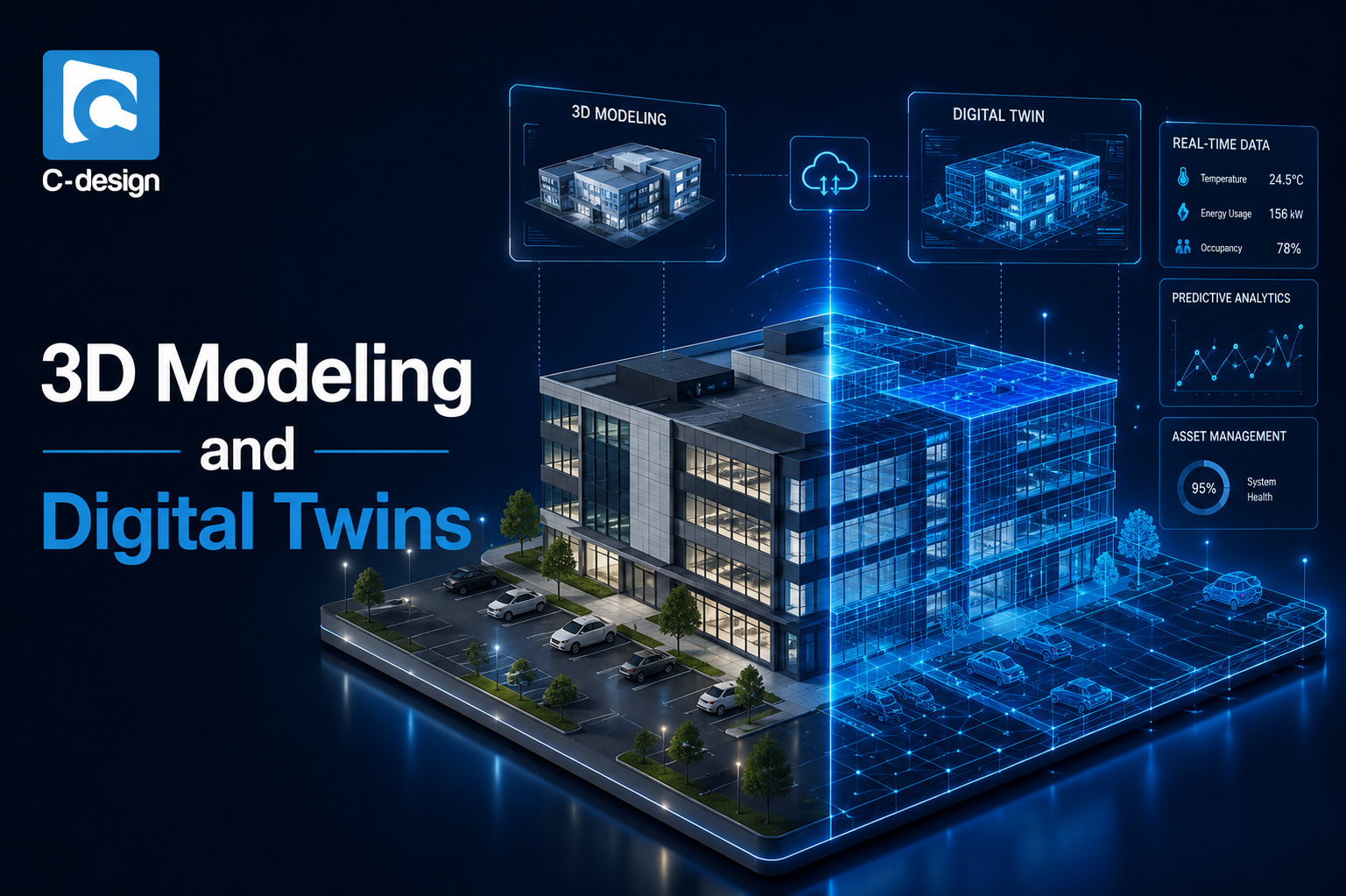
Professional 3D modeling allows for the creation of “digital twins”—virtual replicas that are indistinguishable from their physical counterparts. This capability is transformative for marketing departments. Instead of waiting for a physical prototype to be manufactured and then shipping it to a studio for a photoshoot, marketers can begin creating promotional content as soon as the 3D model is finalized.
The Art of Texturing and Lighting
The difference between a “good” 3D model and a “world-class” one often lies in the Texturing. This is the process of wrapping a 2D image around a 3D object to simulate real-world materials. At a professional level, this involves PBR (Physically Based Rendering) workflows. PBR ensures that materials like brushed aluminum, soft leather, or tempered glass react to light exactly as they would in the real world.
•Specular Reflection: How light bounces off shiny surfaces.
•Diffuse Albedo: The base color of the material under flat lighting.
•Normal Mapping: Simulating small surface details like pores in leather or scratches on metal without increasing the polygon count.
This level of detail is crucial for industries ranging from consumer electronics—where the curve of a smartphone’s glass must be perfect—to medical devices, where precision is a matter of safety. When businesses Outsource 3D Modeling services, they are hiring artists who spend years mastering these technical nuances. The result is a library of assets that can be used for high-resolution print ads, social media videos, and interactive web experiences.
Streamlining the Manufacturing Workflow
Beyond marketing, 3D Product Design plays a pivotal role in the manufacturing process itself. 3D models can be used to perform stress tests, check for ergonomic fit, and even calculate the volume of materials needed for production. This “digital first” approach reduces the number of physical prototypes required, which in turn lowers the carbon footprint of the development process—a growing concern for businesses in the EU and North America. By identifying a design flaw in a 3D model, a company can save tens of thousands of dollars in wasted materials and manufacturing time.
Transforming the Living Space: Outsource 3D Furniture Modeling
The furniture industry has witnessed one of the most significant transformations through 3D technology. Traditionally, a furniture brand would need to rent a studio, hire a set designer, move heavy sofas and wardrobes, and spend days on a photoshoot to produce a handful of images for a catalog. If the brand decided to offer the sofa in a new color next season, the entire process would have to be repeated.
When businesses Outsource 3D Furniture Modeling, they unlock the ability to showcase entire catalogs with infinite variations at a fraction of the cost. A single high-quality 3D model can be digitally “re-upholstered” in hundreds of different fabrics and colors in a matter of minutes.
The Power of Contextual Visualization
“3D modeling adds vibrancy and precision to furniture designs, reduces iterations, and significantly cuts production costs by identifying design flaws before the first physical prototype is even built.”
Through advanced 3D Rendering, a single furniture model can be placed in various virtual environments. This is where the true power of outsourcing shines. A specialist team can create a minimalist Scandinavian living room to appeal to customers in Germany, a luxurious corporate office for the New York market, and a breezy, coastal-themed patio for customers in Australia—all using the same base 3D model.
This versatility is essential for global brands looking to tailor their marketing materials to different cultural aesthetics. It allows for “hyper-localization” of content. Furthermore, these 3D assets can be integrated into “Room Planner” tools on websites, where customers can drag and drop furniture into a digital representation of their own home. This interactive element has been proven to reduce product return rates, as customers have a much clearer understanding of the product’s scale and style before purchasing.
Precision in Every Stitch
For high-end furniture manufacturers, the details are everything. The way a cushion sags slightly when sat upon, the visible stitching on a leather headboard, or the grain of a reclaimed oak table—these are the details that convey quality. Expert 3D modelers use specialized software like Marvelous Designer to simulate realistic fabric physics, ensuring that every fold and wrinkle looks natural. When you Outsource 3D Furniture Modeling, you are ensuring that your digital catalog maintains the same level of craftsmanship as your physical products. This attention to detail is what separates market leaders from their competitors in the crowded global furniture market.
Redefining Landscapes: 3D Architecture and Real Estate
For the architectural and real estate sectors, 3D Architecture is the bridge between a vision and its realization. In the past, architects relied on physical scale models and hand-drawn perspectives. Today, the industry standard is the BIM (Building Information Modeling) and high-end 3D visualization. Outsourcing these services allows architects and developers to present immersive walkthroughs and high-resolution flyovers to stakeholders and potential buyers long before ground is broken.
Imagine being able to show a potential investor exactly what the view from the 40th-floor penthouse will look like at sunset, complete with the twinkling lights of the city below. This is the level of storytelling that 3D Rendering enables.
Enhancing Stakeholder Engagement and Approval
One of the most significant hurdles in any architectural project is obtaining approval from planning committees and local communities. A detailed 3D model can demystify a project, showing exactly how a new building will fit into the existing skyline and how it will impact shadows and traffic flow. By providing a clear, realistic visualization, developers can address concerns proactively and build consensus more effectively.
•Shadow Studies: Visualizing how a building impacts sunlight for neighboring properties.
•Interior Walkthroughs: Allowing potential tenants to “experience” the space, leading to faster pre-leasing.
•Virtual Staging: Filling empty apartments with virtual furniture to help buyers visualize the lifestyle.
These models incorporate accurate geographical data, lighting simulations based on the time of day, and realistic landscaping that reflects the local flora of the region, whether it’s the temperate forests of Germany or the arid landscapes of the US Southwest. By integrating 3D Rendering into the architectural workflow, firms can identify structural conflicts early—such as a HVAC duct intersecting with a structural beam—saving millions in potential construction errors and streamlining the approval process with local planning authorities.
The Role of 3D in Sustainable Urban Planning
As cities in the UK, France, and beyond move toward “Green City” initiatives, 3D Architecture plays a vital role in sustainable design. Architects can use 3D models to simulate airflow for natural ventilation, calculate solar gain for energy efficiency, and plan for green roofs and vertical gardens. Outsourcing these complex simulations to experts ensures that the data is accurate and the visualizations are compelling, helping to secure funding for eco-friendly projects. In this context, 3D modeling is not just a visual tool; it’s a critical component of responsible engineering and urban development.
The Immersive Frontier: Augmented Reality – Virtual Reality (AR-VR)
As we look toward the future of retail and design, the integration of Augmented Reality – Virtual Reality is no longer a futuristic concept but a present-day requirement. The global market for AR and VR is projected to reach unprecedented heights by 2030, driven by the demand for immersive shopping and training experiences. Businesses are increasingly utilizing AR to allow customers to “place” a 3D furniture model in their actual living room using a smartphone, or VR to provide a fully immersive tour of a yet-to-be-built penthouse.
This technology bridges the gap between the digital and physical worlds, providing a “try before you buy” experience that was previously impossible. For a customer in London or Sydney, being able to see exactly how a new dining table fits in their space reduces the friction of the buying process and builds immense brand loyalty.
The Technical Challenge of Real-Time Immersion
The complexity of creating models that are both high-fidelity and optimized for real-time performance in AR/VR environments is immense. Unlike a static render, which can take hours for a computer to process, an AR/VR model must be rendered 60 to 90 times per second to ensure a smooth experience. This requires a highly specialized skill set:
1.Low-Poly Modeling: Creating the illusion of detail with a minimal number of polygons.
2.Baking Textures: Transferring high-resolution lighting and detail onto a low-resolution model.
3.Optimization for Mobile: Ensuring the model runs smoothly on various devices, from high-end VR headsets to mid-range smartphones.
This specialized niche is a primary reason why professionals choose to Outsource 3D Modeling services. It requires a deep understanding of polygon counts, bake-down processes, and platform-specific requirements (like USDZ for Apple or GLB for Android) to ensure a seamless user experience. A poorly optimized model can cause lag, which in a VR environment can lead to motion sickness—the ultimate deterrent for a customer. By outsourcing to experts like C-Design, businesses ensure that their immersive content is as polished as their physical products.
Beyond Retail: AR-VR in Training and Maintenance
The applications of Augmented Reality – Virtual Reality extend far beyond the showroom. In the manufacturing and healthcare sectors, 3D models are used for immersive training simulations. Surgeons can practice complex procedures on a virtual patient, and technicians can learn to repair heavy machinery using AR overlays that highlight specific components. These applications require 100% anatomical or mechanical accuracy. Outsourcing the creation of these models to a team with experience in industrial and medical visualization is the only way to ensure the level of detail required for these high-stakes environments. This is where the versatility of a partner like C-Design becomes a critical asset.
Why C-Design is the Versatile & Top Priority for 3D Services
Since its inception in 2005, C-Design has established itself as a titan in the outsourcing industry. Operating under a banner of innovation and excellence, the firm has spent over 15 years perfecting the art of digital representation. But what truly makes C-Design the top choice for businesses worldwide? It’s not just about their technical skill; it’s about their commitment to being a “Design Partner” rather than just a service provider.
1. Unmatched Versatility Across Industries
C-Design does not just specialize in one niche; its expertise spans across Furniture Manufacturing, the Architectural Sector, Real Estate, Healthcare, and even Film and Gaming. This cross-industry knowledge is a massive advantage for clients. For example, a furniture manufacturer might benefit from C-Design’s experience in architectural lighting, while an architectural firm might leverage their skills in high-end product texturing. This “cross-pollination” of ideas allows them to bring unique perspectives to every project, applying techniques from VFX to industrial engineering to create results that are both beautiful and technically sound.
2. A Powerhouse of Professional Talent
With a team of over 200 professionals, C-Design possesses the collective brainpower to handle projects of any scale. Whether you need a single 3D asset for an e-commerce store or a complete virtual tour of a new stadium, they have the manpower to deliver on time. Their staff includes expert modelers, texture artists, lighting specialists, and AR/VR developers who are well-versed in the specific standards and expectations of the US, UK, and European markets. They understand the importance of clear communication, sticking to deadlines, and maintaining the highest levels of data security—qualities that are non-negotiable for international businesses.
3. Proven Track Record of Success
Having delivered over 500 projects to more than 140 satisfied clients globally, C-Design’s portfolio speaks for itself. Their longevity in the industry is a testament to their ability to adapt to changing technologies and client needs. Their commitment to quality is backed by a workflow that prioritizes client communication and iterative refinement. They don’t just send a final file and disappear; they work closely with your team to ensure the final output integrates perfectly into your existing marketing or engineering pipelines.
4. Cutting-Edge Technological Integration
C-Design stays ahead of the curve by continuously investing in the latest tools for 3D Rendering, Texturing, and interactive media. They are early adopters of AI-driven modeling tools, which allow them to increase efficiency without compromising on the “human touch” that defines great art. Their ability to deliver high-performance models for Augmented Reality – Virtual Reality platforms—optimized for everything from the latest Meta Quest headsets to the iPhone’s ARKit—makes them a future-proof partner for any forward-thinking business.
5. Global Perspective and Quality Standards
Working with clients across the US, UK, Germany, France, and Australia has given C-Design a deep understanding of global design standards. They know that a “modern” aesthetic in Berlin might differ from one in Sydney. This cultural intelligence allows them to provide valuable feedback to their clients, often suggesting improvements that enhance the final product’s appeal in its target market. This global perspective is what makes them a “Top Priority” for businesses that operate on an international scale.
The C-Design Workflow: A Blueprint for Success
The secret to C-Design’s consistent quality lies in its structured Product Modeling Workflows. Every project undergoes a rigorous multi-stage process:
1.Requirement Analysis: Understanding the client’s vision, target audience, and technical specifications.
2.Concept & Block-out: Creating the basic geometry to ensure proportions and scale are accurate.
3.Detailed Modeling: Adding intricate details that bring the product or structure to life.
4.Texturing & Shading: Applying realistic materials and surface properties.
5.Lighting & Rendering: Setting the scene to achieve the desired mood and photorealism.
6.Quality Assurance: A final review to ensure the output meets C-Design’s high standards and the client’s expectations.
This meticulous approach ensures that whether you are looking for 3D Product Design or complex 3D Architecture, the final result is nothing short of perfection.
Conclusion: Partnering for a 3D-First Future
As the digital and physical worlds continue to merge, the quality of your 3D assets will define your brand’s success. By choosing to Outsource 3D Modeling services to a proven leader like C-Design, you are not just hiring a vendor; you are gaining a strategic partner dedicated to elevating your vision.
Whether you are a furniture manufacturer in Germany, a real estate developer in Australia, or a product designer in the US, C-Design offers the versatility, expertise, and global perspective needed to bring your ideas to life with unparalleled precision.
CTA: Connect with our Expert Team
Frequently Asked Questions (FAQs)
1. Why should I outsource 3D modeling instead of hiring an in-house team?
Outsourcing allows you to access a global pool of specialized talent without the overhead costs of salaries, benefits, hardware, and software licenses. It also provides the flexibility to scale your production based on project demands.
2. What industries can benefit from C-Design’s 3D modeling services?
C-Design serves a wide array of industries, including furniture manufacturing, architecture, real estate, healthcare, industrial design, engineering, film making, and the video gaming industry.
3. How does 3D modeling improve the sales process for furniture businesses?
By using Outsource 3D Furniture Modeling, businesses can create photorealistic visuals and AR experiences that allow customers to visualize products in their own homes, significantly increasing conversion rates and reducing returns.
4. Can C-Design create models specifically for Augmented Reality (AR) and Virtual Reality (VR)?
Yes, C-Design has extensive experience in developing optimized 3D models specifically designed for AR and VR platforms, ensuring high performance and immersive user experiences.
5. What is the typical workflow for a 3D modeling project at C-Design?
The workflow includes requirement analysis, initial block-out, detailed modeling, texturing, lighting, rendering, and a final quality assurance phase to ensure the highest standards are met.
6. Does C-Design handle both 2D and 3D design requirements?
While specializing in 3D, C-Design also offers comprehensive 2D services, including art and drafting, providing a one-stop solution for all your design and visualization needs.
Targeted Tags
Related Blogs
Art assets in different styles like 2D art for interactive applications, Games, and UI. We are having more than 15 years of experience